


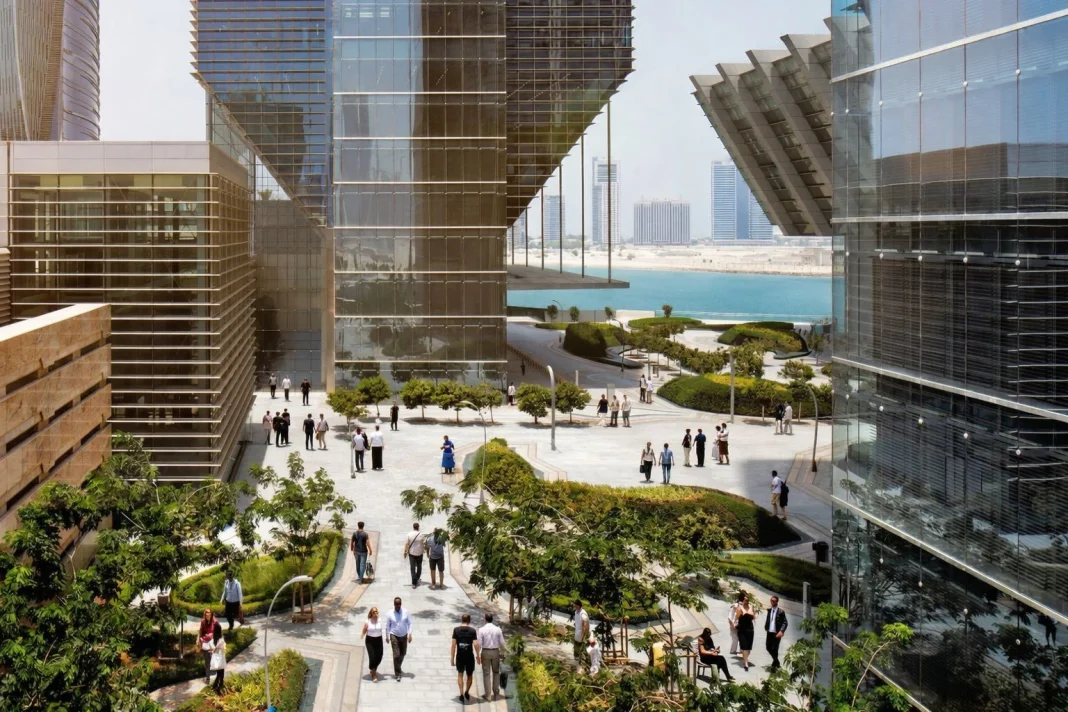
Which financial center in the world today offers the most competitive framework for a venture capital fund with exposure to emerging markets? The answer makes many in London, Singapore, or Luxembourg uncomfortable: Abu Dhabi.
The Abu Dhabi Global Market (ADGM) published in late 2025 Consultation Paper No. 12, a sweeping reform of its private funds framework that expands and consolidates existing benefits for venture capital managers. The result is an ecosystem where corporate income tax is 0%, there is no dividend withholding, and profit repatriation is unrestricted.
Why Abu Dhabi Has Become the Global Venture Capital Magnet
Since its full opening in 2015, the ADGM has gone from being a bold bet to becoming the largest financial center in the region by number of active licenses, with more than 11,128 by the close of the first half of 2025. More than 300 financial firms collectively managing $28.6 trillion globally have a presence there. In Abu Dhabi, they didn’t just build a hub: they built a systemic competitive advantage.
What sets Abu Dhabi apart from the rest is not just the fiscal climate. It’s the combination of Anglo-Saxon common law applied directly, independent local courts, and a regulatory authority (FSRA) that acts with agility and clarity. For a venture capital fund operating across multiple emerging market jurisdictions — from South Asia to Sub-Saharan Africa — that legal certainty is worth as much as the tax incentives.
ADGM’s 2025–2026 Reforms Applied to Venture Capital
Consultation Paper No. 12 proposes two new categories of private fund managers: Sub-Threshold Fund Managers (STFM), for managers with maximum committed capital of $200 million, and Institutional Fund Managers (IFM), for those operating exclusively with large institutional investors. Both categories benefit from the regulatory facilities previously available only to venture capital funds — and that is the disruptive change: Abu Dhabi is democratizing its most favorable regime.
For venture capital firms already established in Abu Dhabi, the reform consolidates the committed capital limit at $200 million in aggregate, allows master/feeder structures, and maintains regulatory capital requirements at zero for managers meeting eligibility criteria. An architecture designed for agile funds, not financial dinosaurs.
Emerging Markets: The Strategic Bet Driving Abu Dhabi
Abu Dhabi doesn’t attract venture capital by chance: it does so because its geographic position places it at the crossroads of three major emerging market blocs — South Asia, East Africa, and the Arab world. Funds registered in the ADGM have access to a network of 91 double taxation treaties in force and 31 more under negotiation, making Abu Dhabi a fiscally efficient platform for structuring investments in countries where local legal certainty is lower.
Abu Dhabi’s venture capital ecosystem is growing at a pace that surprises even the most attentive observers in the sector. At the Abu Dhabi Finance Week in December 2025, the FSRA presented the reforms to the international asset management community, with record attendance reflecting genuine market interest. ADGM is no longer competing only with Dubai’s DIFC: it competes with Singapore, Luxembourg, and the Cayman Islands.
Abu Dhabi vs. Other Financial Centers: The Venture Capital Tax Map
For a venture capital manager evaluating where to domicile their fund, the numbers speak for themselves. Abu Dhabi offers an environment few can match in the combination of taxation, legal regime, and access to high-growth markets. The 2025–2026 reform significantly widens that competitive gap, especially for mid-sized funds with appetite for developing economies.
The figure that summarizes the transformation: ADGM has multiplied its number of licensed entities more than tenfold from 2015 to 2025, going from a pilot project to becoming the fastest-growing IFC in the MENA region. Abu Dhabi is not waiting for capital to arrive on its own: it is going out to find it with a regulatory and fiscal framework that eliminates friction.
| Criterion | Abu Dhabi (ADGM) | Singapore | Luxembourg | Cayman Islands |
|---|---|---|---|---|
| Corporate tax for VC funds | 0% | 17% (partial exemptions) | 0% (QIF) | 0% |
| Applicable law | Own common law | Common law | Luxembourg civil law | Common law |
| Double taxation treaties | 91 in force | 80+ in force | 80+ in force | Limited |
| Geographic access to emerging markets | Asia, Africa, Middle East | Asia-Pacific | Eastern Europe | Global |
| Regulatory capital requirement VC | 0 USD (VCFM) | Variable | Variable | Minimum |
The Future of Venture Capital in Abu Dhabi: A Trend With No Reversal
The direction is clear: Abu Dhabi will continue consolidating its position as the preferred hub for venture capital funds with exposure to emerging markets over the next three to five years. The final implementation of the Consultation Paper No. 12 reforms is scheduled for 2026, and once in force, ADGM will offer the most competitive regulatory framework in its history for small and mid-sized venture capital managers.
The advice for any investor or fund manager who has not yet seriously looked at Abu Dhabi is simple: the opportunity cost of ignoring it is growing every quarter. The 2025–2026 reforms are not a cosmetic adjustment; they are a statement of intent from a financial center that aspires to be among the top five in the world before 2030, and that has chosen venture capital and emerging markets as one of its priority growth vectors.