

Can a city that fifty years ago was little more than a fishing port really challenge New York, London, or Singapore in finance? Dubai has just shown that it can—and is doing exactly that. On March 26, 2026, the emirate reached 7th place in the Global Financial Centres Index (GFCI), its best ranking ever.
This is not an isolated figure. It is the culmination of a carefully calibrated strategy that has been sending unmistakable signals for years. Dubai has entered the Top 15 across all sectors evaluated by the GFCI for the first time at the same time, something no financial centre in the Middle East, Africa, or South Asia had ever achieved.
Dubai makes history: the No. 7 spot no one expected this soon
The GFCI is the strictest thermometer of the global financial world: it is built from more than 29,000 assessments by industry professionals and cross-checks data from more than 100 international indices. Climbing to seventh place in that ranking is no accident; it is a validation of a financial architecture that has been two decades in the making.
Dubai now stands in that Top 7 alongside London, New York, Hong Kong, Singapore, San Francisco, and Shanghai. To put it in perspective, this is the first time in history that a financial centre from South Asia, the Southern Hemisphere, or Africa has reached such a position. The jump is not just symbolic; it has direct consequences for attracting capital and international investment .
Dubai and DIFC: the engine behind the rise
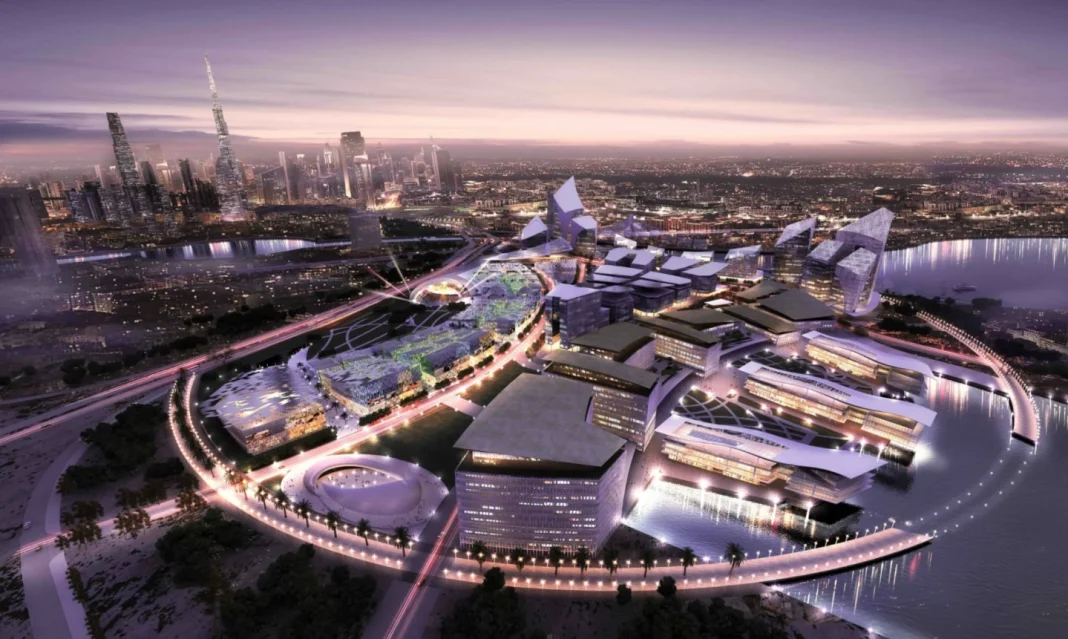
The engine behind this achievement has a name of its own. Dubai has built its financial leadership around the DIFC, an independent financial jurisdiction with its own legal system based on common law, operating like a city within a city. By the end of 2025, it had more than 9,000 active registered companies, a 28% year-over-year increase.
The DIFC is not just a district of skyscrapers. It is home to major global banks, more than 500 wealth managers, 102 hedge funds, and over 1,677 FinTech and artificial intelligence companies, with a startup ecosystem that has collectively attracted more than $4.5 billion in regional funding. That critical mass is what has propelled Dubai to the top tier of the GFCI.
The ranking that measures what markets actually value
The GFCI evaluates five key dimensions: business environment, financial sector development, human capital, infrastructure, and overall reputation. Dubai has entered the global Top 5 in FinTech, government and regulation, professional services, and trading, which reflects an institutional maturity that would have seemed impossible only a few years ago for a Gulf emirate.
What matters most is that GFCI participants themselves have named the DIFC as the world’s number one financial centre expected to become more significant. In market language, that means institutional money is backing Dubai with a conviction that now surpasses even European cities with centuries of financial history.
The sectors where Dubai is already ahead of Europe
Dubai‘s rise in the GFCI is not uniform: in some sectors, the emirate already outperforms Western capitals with decades of advantage. In banking, the ranking places Dubai 14th globally, while in investment management, insurance, FinTech, and regulatory services it has broken into the global Top 10, ahead of cities such as Frankfurt, Amsterdam, and Milan.
The DIFC’s competitive edge—0% personal income tax and corporate tax, 100% foreign ownership, and free capital repatriation—remains a powerful argument for any financial firm deciding where to locate a regional headquarters. In an increasingly pressured European tax environment, Dubai is becoming the most serious and well-regulated alternative in the global market.
| Sector assessed by GFCI | Dubai’s position (2026) | Comparable European reference |
|---|---|---|
| FinTech and Innovation | Global Top 5 | Frankfurt (Top 12) |
| Investment Management | Global Top 10 | Milan (Top 15) |
| Professional Services | Global Top 5 | Amsterdam (Top 11) |
| Banking | 14th globally | Madrid (outside Top 15) |
| Business Environment | Global Top 10 | Paris (Top 10) |
Dubai 2033: the plan to reach the global Top 4
Seventh place is not the final destination. Dubai’s Economic Agenda D33 sets the goal of becoming one of the world’s four leading financial centres by 2033, a target that now looks more achievable than ever after the GFCI release. With the DIFC expanding—1.7 million square feet of new office space are under construction—and thousands of new companies expected to arrive, the trajectory is unmistakable.
For investors and financial professionals still wondering whether Dubai is already a top-tier market or still an emerging promise, the 2026 GFCI gives the clearest answer possible: the emirate is no longer aiming for the big table—it is already seated at it. Ignoring Dubai in any international financial diversification strategy from today onward would be a mistake the markets are unlikely to forgive.