


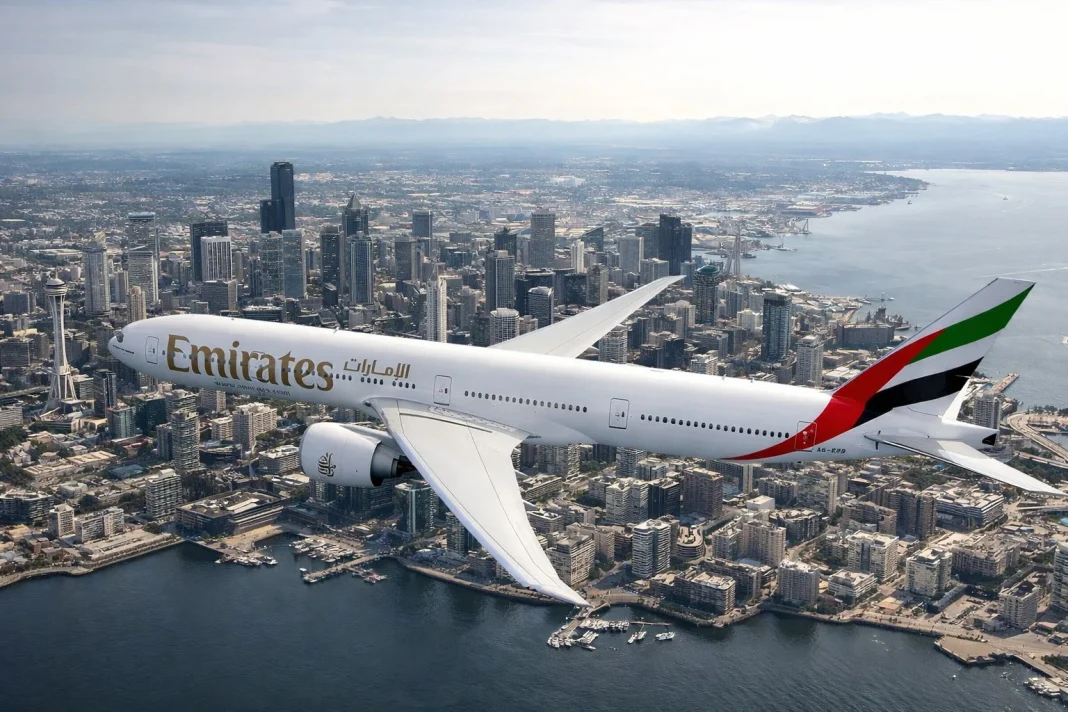
Can an airline the size of Emirates come to a complete stop in less than 24 hours? It happened. On February 28, 2026, the largest airline in the Middle East suspended all operations from Dubai following the sudden closure of UAE airspace, leaving more than 20,000 passengers stranded at terminals around the world.
What followed was even more revealing: Emirates did not resume its flights all at once, but instead applied a highly selective priority protocol that left thousands of travelers with tickets in hand out in the cold. Understanding how that system works could make all the difference if you have a trip planned in the coming weeks.
Why Emirates Suspended All Its Flights from Dubai
Emirates’ suspension was not a unilateral decision — it was a direct response to the closure of UAE airspace, ordered following joint U.S. and Israeli strikes on Iran and Iranian retaliatory attacks on targets in the Gulf. In a single day, Emirates cancelled 227 of its 236 scheduled flights, removing approximately 900,000 seats from the global market within 24 hours.
The impact on global connectivity was devastating, as Emirates controls more than 60% of seat capacity at Dubai Airport. Routes between Europe, Asia, Africa, and Oceania that normally transit through Dubai were simultaneously disrupted, forcing hundreds of airlines to cancel or divert their own international flights.
How Emirates Managed the Return to Dubai’s Skies
When Emirates activated its 72-hour contingency plan, the priority was clear: first, passengers with bookings made before February 28, then perishable goods and pharmaceuticals that had been stranded in cargo for days. The airline designated its mobile app as the primary management channel and explicitly asked that no one go to the airport without a reissued and confirmed e-ticket.
Dubai International Airport — Emirates’ home base and one of the busiest airports on the planet — operated with restricted terminal access, with additional immigration personnel deployed to manage the gradual increase in outbound passengers. Only transit passengers with a confirmed connecting flight were allowed to access the facilities.
Which Emirates Routes Are Operational and Which Remain Suspended
By March 7, Emirates had reactivated 45 global destinations in a first wave, covering cities such as London, Sydney, São Paulo, and Manchester. A week later, the operational network had grown to 82 destinations, though with reduced frequencies and avoiding air corridors over the Strait of Hormuz, adding between 25 and 50 minutes to east-west flights.
Emirates routes to Europe and Asia — those with the highest corporate demand — are the ones restored first, but with very limited premium class availability. Last-minute upgrades and the chauffeur service have been temporarily suspended to prioritize the repositioning of crews and aircraft scattered across the globe.
Emirates and Its Change Policy: What Rights Does the Passenger Have
Emirates established one of the most flexible policies in its history: tickets issued before February 28 can be modified up to nine times or a full refund requested without penalty, with validity extended until April 15, 2026. This is a clear signal that the airline anticipates at least two more weeks of operational volatility across its network.
For those traveling for professional reasons, the advice is to avoid relying on last-minute upgrades and to consider alternative airports such as Muscat, Doha, or Riyadh, which reopened traffic before Dubai and offer connections to the same destinations with greater stability during this period.
| Indicator | Data | Date |
|---|---|---|
| Flights cancelled on March 2 | 227 out of 236 scheduled | Mar 2, 2026 |
| Seats removed that day | ~900,000 across the region | Mar 2, 2026 |
| Total affected passengers | More than 20,000 | Since Feb 28, 2026 |
| Reactivated destinations (first wave) | 45 global routes | Mar 7, 2026 |
| Operational destinations (following week) | 82 destinations | Mar 17, 2026 |
When Emirates Will Return to Normal and What to Expect in the Coming Months
Industry analysts expect Emirates to recover close to 100% capacity in the first weeks of April, provided the regional security situation does not deteriorate again. The airline itself has acknowledged that schedules may change with little notice should air corridors be restricted once more, making active app alerts essential.
In the long term, the crisis has exposed both the vulnerability of the single-hub model and Emirates’ resilience in reactivating within days, not weeks. For the frequent traveler or corporate mobility manager, the lesson is clear: diversifying itineraries and not relying exclusively on Dubai as an intercontinental connection point will be standard practice in 2026.