

What if the countries that grow the most are not those that avoid crises, but those that await them with a strategy ready? The UAE has spent decades proving this is not rhetoric: it is an economic system deliberately designed to thrive in instability.
Every global shock of the last twenty years—the oil price collapse in 2014, the 2020 pandemic, the geopolitical tensions of 2025–2026—has left the UAE in a stronger position than before. The IMF projects 5% growth for 2026, the highest of all Gulf Cooperation Council countries, in a context of widespread global slowdown.
The UAE Facing Crisis: The Strategy No One Else Applies
When in 2014 the price of oil collapsed from $115 to $30 per barrel, most Gulf states cut budgets and halted projects. The UAE accelerated investment in infrastructure, technology, and tourism, turning an existential threat into the definitive push toward diversification. That pattern was not accidental: it is the backbone of a sustained economic policy.
The result is compelling: more than 70% of GDP in the UAE no longer depends on oil. Sectors such as logistics, finance, artificial intelligence, and tourism have absorbed the space previously occupied by hydrocarbons, creating an economy capable of functioning even if crude oil prices collapse.
Why the UAE Is the New Magnet for Global Capital
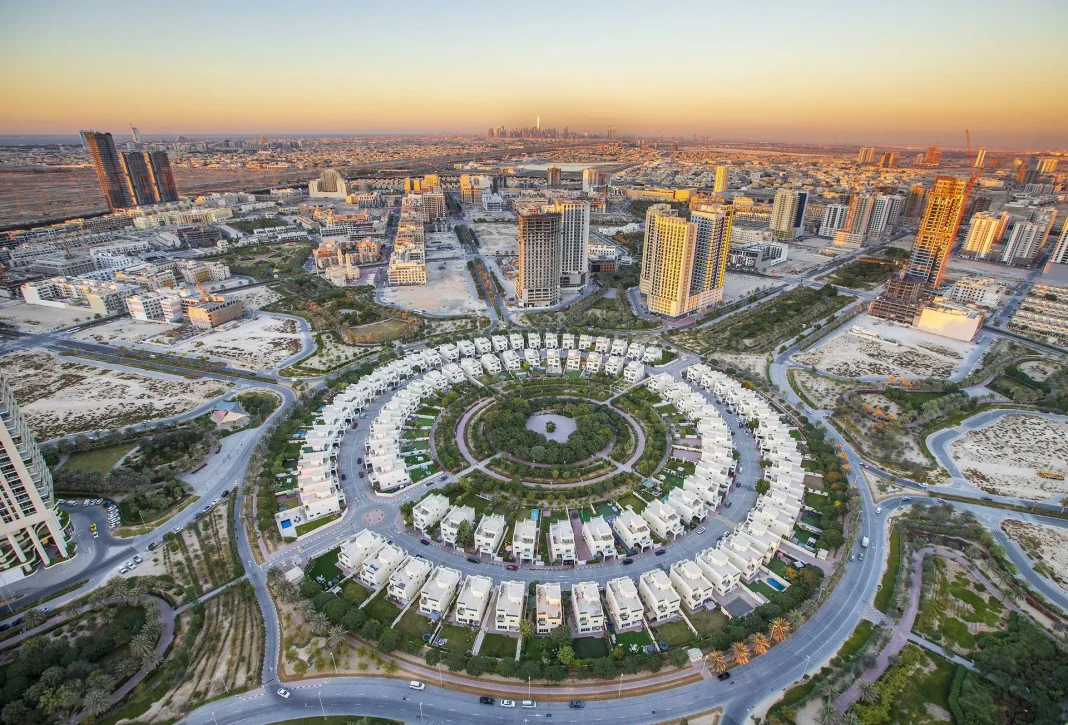
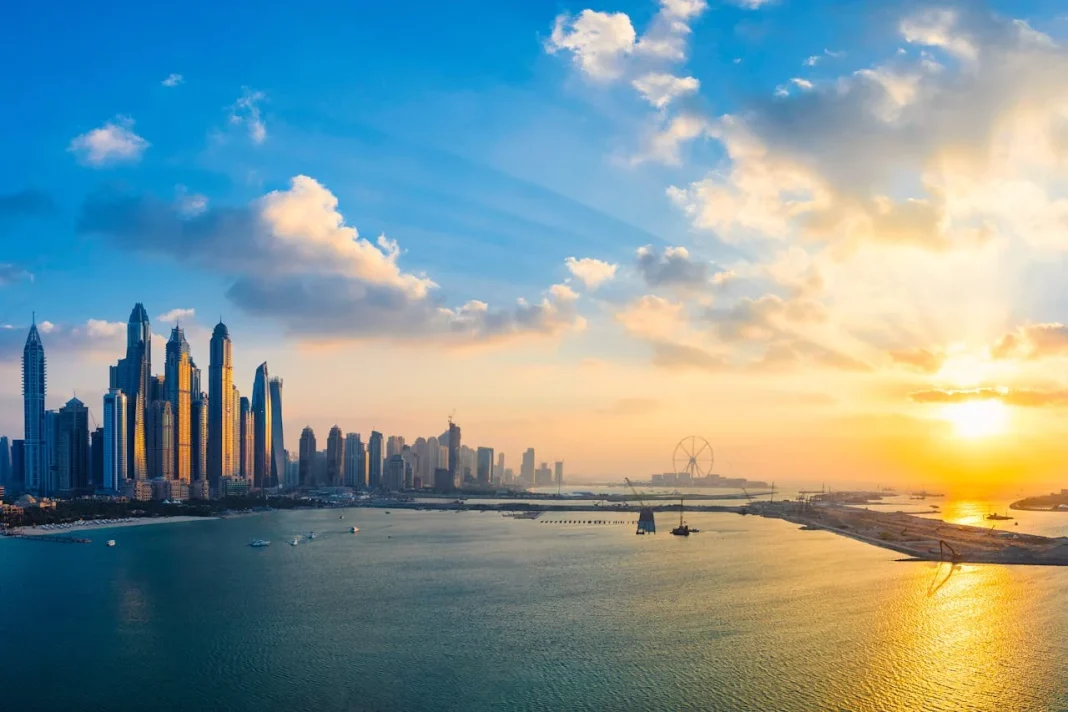
The UAE has gone from being a commodity exporter to becoming a top-tier financial and commercial hub. Dubai—its most dynamic emirate—has been the visible protagonist of this transformation, attracting capital from conflict zones such as Russia, Ukraine, and Iran thanks to its regulatory stability and geopolitical neutrality.
The UAE’s sovereign wealth funds manage nearly $3 trillion in assets through vehicles such as ADIA, Mubadala, and ADQ. This financial muscle allows the government to invest counter-cyclically: spending when the world contracts, and doing so with strategic precision in high-value-added sectors.
Dubai and Abu Dhabi: Two Engines, One Direction
Dubai and Abu Dhabi do not compete with each other: they complement each other. Dubai leads in trade, tourism, real estate, and financial services, while Abu Dhabi concentrates energy, advanced industry, and sovereign investments. This division of labor between emirates is one of the least-mentioned keys to the UAE model.
The contrast with the rest of the region is striking. While Saudi Arabia still depends on oil to cover growing fiscal deficits, the UAE maintains fiscal and current account surpluses even in crisis years. That solidity is not luck: it is the cumulative result of two decades of sustained structural reforms.
The UAE in 2025–2026: Resilience Tested Under Real Fire
In February 2026, the UAE suffered direct attacks on key infrastructure, including Dubai Airport. Any other country would have entered contraction mode. The UAE’s tourism and aviation sectors began their recovery within weeks, with Emirates restoring routes and the government announcing compensatory investments. The crisis became, once again, an argument for resilience.
Private credit grew 9% year-on-year in 2025, a sign that businesses and investors maintain confidence in the local economy even under external pressure. Dubai closed the third quarter of 2025 with 5.3% growth, driven by health, finance, and construction—all sectors unrelated to oil.
| Crisis | Year | UAE Response | Subsequent Result |
|---|---|---|---|
| Oil price collapse | 2014–2016 | Acceleration of diversification | Non-oil GDP exceeds 70% |
| COVID-19 Pandemic | 2020 | Investment in Expo 2020, visa reforms | 6% growth in 2022 |
| Regional geopolitical tensions | 2023–2025 | Active neutrality, attraction of safe-haven capital | Record FDI and tourism |
| Attacks on infrastructure | Feb 2026 | Accelerated recovery, compensatory investment | Projected 5% growth in 2026 |
| Global slowdown | 2026 | Credit expansion and non-oil sectors | Highest GCC growth per IMF |
The UAE Horizon: The Best Is Yet to Come
Projections for the coming years indicate that the UAE will consolidate its role as a reference economy in the corridor between Asia, Europe, and Africa. Projects such as Etihad Rail—which will connect all emirates with Saudi Arabia—, the expansion of Jebel Ali Port, and the transition toward artificial intelligence as a productive sector place the country in a position of structural advantage for the next decade.
The advice analysts repeat time and again is this: the UAE is not an investment destination for those seeking quick returns, but for those who understand that sustained stability is the scarcest asset in the world in 2026. Dubai and Abu Dhabi do not sell promises; they sell a track record of demonstrable execution, crisis after crisis.