

Panic continues in Dubai. An unmanned device struck Tower 2 of the Address Creek Harbour, one of the emirate’s most exclusive residential buildings. The incident occurred at 2:45 AM. Authorities evacuated all residents and Civil Defense contained a fire that affected one or two floors. No injuries were reported. But the image of flames pouring from a luxury skyscraper in Dubai had already gone around the world before dawn.
What Happened That Night in Dubai
The Dubai Media Office (DMO) confirmed that a drone struck Address Creek Harbour Tower 2 at around 2:45 AM on March 12. Emergency teams responded quickly and the fire was brought under control within minutes, with no casualties to report.
UAE authorities suspected from the outset that the drone was of Iranian origin, as part of an attack campaign that intensified from late February onward. The operational response was immediate: full building evacuation and perimeter lockdown.
Dubai Creek Harbour, the Neighborhood No One Expected to See in Flames
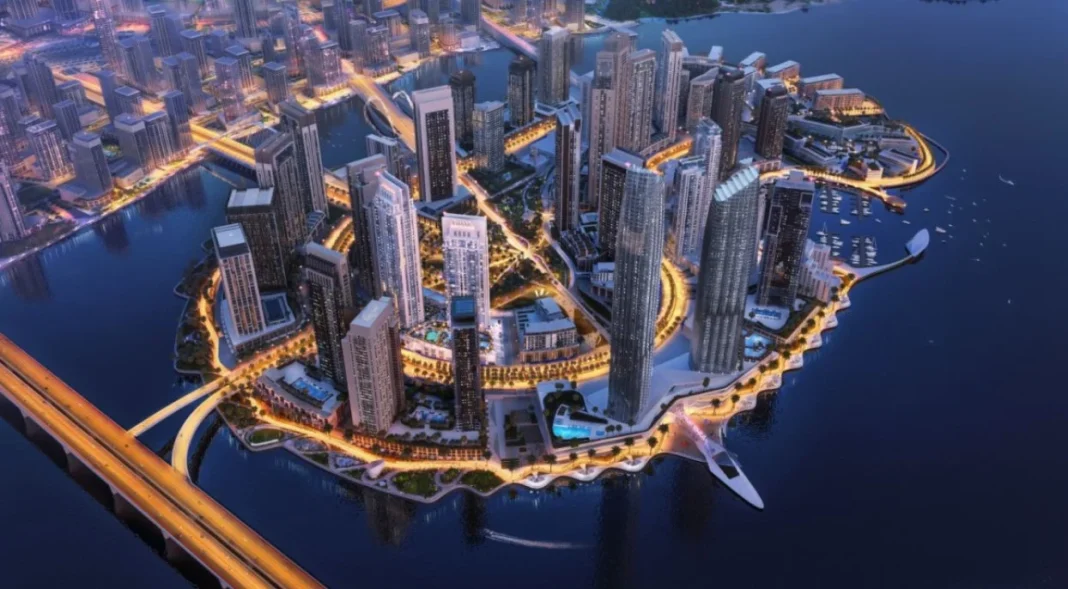
Creek Harbour is one of Dubai‘s most ambitious urban developments: a brand-new district alongside the historic Creek estuary, featuring residential towers, five-star hotels, and direct access to the Ras Al Khor Wildlife Sanctuary. It is not an industrial or military zone. It is where families, expats, and high-net-worth tourists live.
That is precisely why the impact made such global headlines: if a drone can strike the Address Creek Harbour in the dark, the perception of absolute security that Dubai has marketed for decades is called into question. This is no minor detail for an emirate whose economy depends heavily on tourism and foreign investment.
A Full Week of Attacks on the Emirates
The Creek Harbour incident was not an isolated case. In the early hours of March 12 alone, two other drones fell near Dubai International Airport (DXB), causing four minor injuries. Simultaneously, in Abu Dhabi, defense systems intercepted additional drones and a minor fire broke out at the old airport.
Since February 27, UAE defense systems have detected hundreds of Iranian Shahed drones in daily waves of between 148 and 209 units. The cumulative total surpassed 940 identified drones by early March, with an interception rate exceeding 93%.
The Weapon Changing the Rules of the Game in the Gulf
| Parameter | Shahed-136 Drone |
|---|---|
| Origin | Iran |
| Unit cost | Less than $20,000 |
| Range | Up to 2,500 km |
| Flight type | Low altitude, difficult to detect |
| Typical target | Civil and military infrastructure |
| Interceptor cost | Several million dollars |
The Shahed-136 is the weapon that has turned aerial attacks into a war of economic attrition: a $20,000 drone forces the launch of a multi-million-dollar interceptor missile. Iran can saturate the Gulf’s airspace at a rate no conventional defense system can financially sustain in the long term.
Its triangular design and low-altitude flight path make it particularly difficult to detect in time. In the case of the strike on Address Creek Harbour, the tower was damaged but remained standing; the real damage was symbolic: Dubai, a symbol of modernity and stability, burned on the front page.
What This Means for Dubai and Its Investors
In the short term, Dubai is keeping its essential infrastructure operational: the international airport resumed flights normally within hours of the incident, and the government was quick to communicate that the situation was under control. That response capacity and institutional communication is precisely one of the most valued assets by international investors.
In the medium term, however, the appreciation of the real estate market in areas such as Creek Harbour will depend on how the conflict with Iran evolves. Those with assets in Dubai should closely monitor ongoing diplomatic agreements and diversify toward areas with lower symbolic exposure to potential future attacks. The opportunity is still there; risk management, now more than ever, is too.