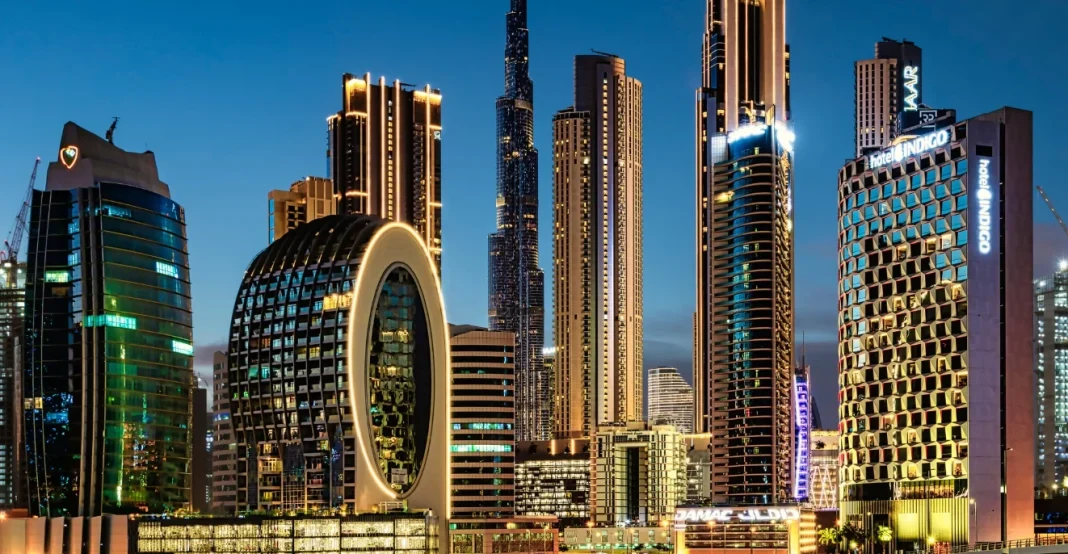


What if everything you know about investing in Abu Dhabi was based on the market from three years ago? The emirate is no longer a secondary destination compared to Dubai: in 2025 it closed with AED 142 billion in transactions, a 47% increase in value compared to 2024, according to data from the Real Estate Markets Authority (ADREC). The model that worked — buying in established areas and waiting — has structurally changed.
The data that confirms it: the off-plan segment represented 66% of all transactions for the year, with 16,410 sales valued at AED 58.4 billion. Abu Dhabi is not in a bubble; it is in a reconfiguration. And in that reconfiguration, there are areas that have already run too far and others where the entry price is still rational.
Abu Dhabi: The 38% That Didn’t Come From Nowhere
The 38% growth in off-plan sales during the first half of 2025 compared to the same period in 2024 is not a statistical accident. It is the cumulative result of three factors: the expansion of freehold zones for foreigners, flexible developer payment plans — with down payments from 10% — and the pull effect of the Golden Visa program, which links real estate purchases to long-term residency.
The Abu Dhabi government has invested in positioning the emirate as a high-net-worth destination. The arrival of multinationals opening regional headquarters, sustained demographic growth, and the development of cultural districts such as Saadiyat have created structural demand that does not depend on speculative cycles. The market grew because the product improved.
Where the Real Margin Lies in Abu Dhabi Today
The first emergence of Abu Dhabi as an investment destination in the first half of 2025 had a clear protagonist: the off-plan island of Al Reem. It recorded a 38% rise in off-plan property prices in the second quarter, according to MERED analysis using Quanta data. But precisely that figure is a warning signal for the late investor: Al Reem is no longer the cheap opportunity it was two years ago.
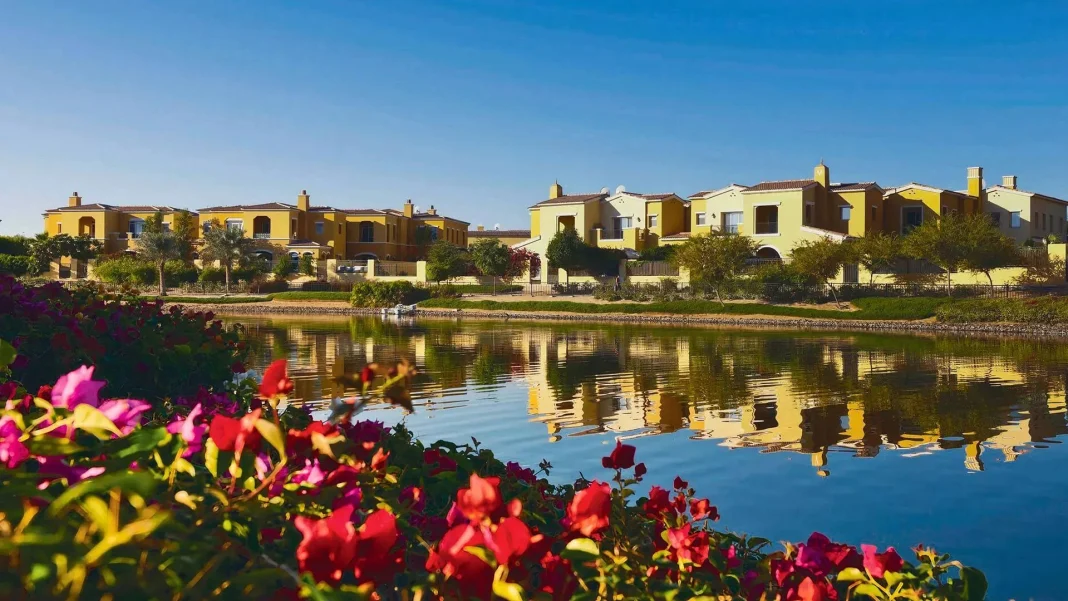
The areas with the most runway in 2026 are those where infrastructure is advancing but prices have not yet absorbed the full improvement. Ramhan Island, Jubail Island, and the new Abu Dhabi Global Market (ADGM) districts fall into that category. Khalifa City recorded 24% growth in off-plan prices in Q2 2025, indicating there is still margin before hitting the ceiling Al Reem has already reached.
Premium Islands and Why Saadiyat Has a Different Profile
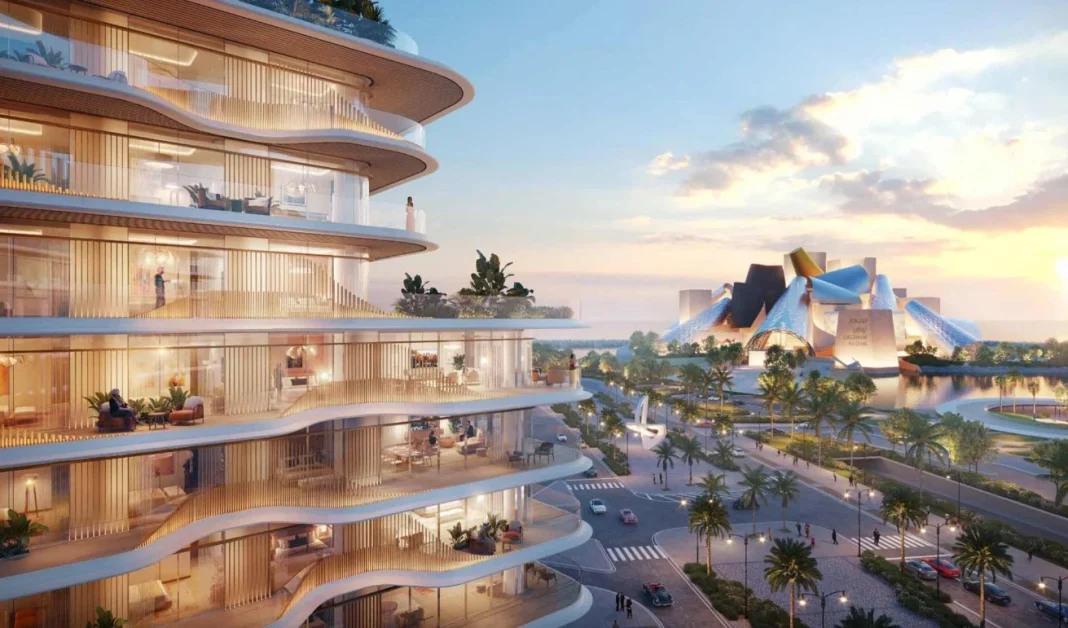
Saadiyat Island is a separate case within the Abu Dhabi market. It does not compete on price: it competes on positioning. ROI for studios is around 8.3% and one-bedroom apartments offer 7.2%, figures that are difficult to replicate in comparable European markets. The Louvre Abu Dhabi and the future Guggenheim consolidate the cultural value perception that protects those prices.
Yas Island follows a different logic: it is the engine of residential tourism. Its off-plan projects sell out within hours of launch because investors know that rental demand — both vacation and professional — is constant. The risk here is not demand, but entering at a price that already discounts much of the appreciation potential.
Abu Dhabi vs. Dubai: The Comparison That Matters
| Indicator | Abu Dhabi 2025 | Dubai 2025 |
|---|---|---|
| Total transactions (value) | AED 142B | +AED 680B |
| Year-on-year growth (value) | +47% | ~+30% |
| Off-plan share of total | 66% | ~83% |
| Foreign direct investment | AED 8.2B (+13%) | Higher absolute volume |
| 2026 capital growth forecast | +16% | +15–20% |
| Average apartment ROI | 7–8.3% | 6–8% |
Abu Dhabi offers lower entry prices in equivalent zones and stricter regulation that reduces the risk of oversupply. Dubai moves more volume, but Abu Dhabi offers more stability per dirham invested in the mid-to-high segment.
2026 Forecast and the Advice Analysts With Skin in the Game Give
Metropolitan Capital Real Estate projects total off-plan sales in Abu Dhabi for 2026 between AED 120 billion and AED 140 billion, with a potential increase of between 20% and 50% over 2025. ValuStrat, for its part, forecasts a 16% capital appreciation for the residential market this year. New supply — 12,800 units expected for 2026 — does not cover current demand, which sustains upward price pressure.
The advice emerging from the data is precise: in 2026, the margin lies in entering before a zone’s price absorbs the infrastructure improvement, not after. Jubail Island and the ADGM waterfront developments in Al Reem concentrate that window. Those who wait until the area is “ready” will pay the price of having known too late.