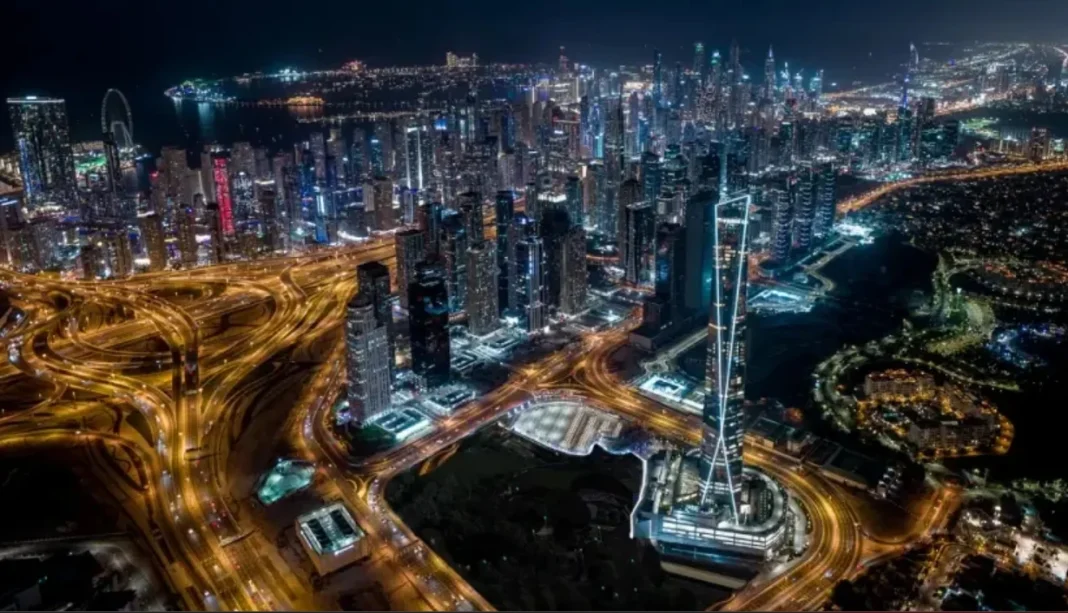


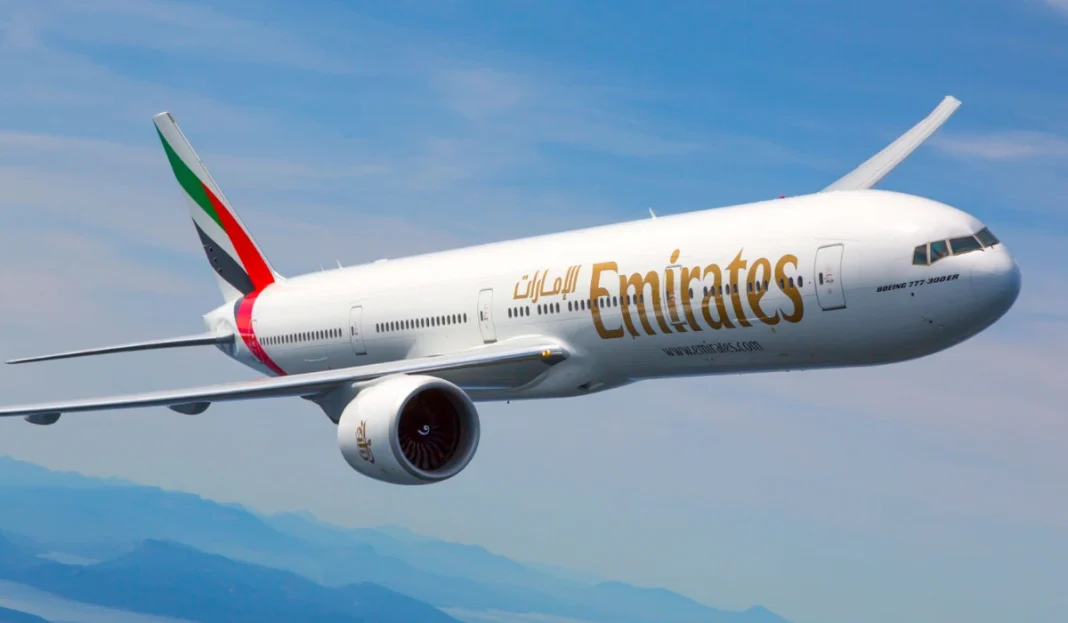
Can the world’s largest airline stop all its flights at once? Emirates, the company that operates more than 3,600 weekly flights from its hub in Dubai, has just done exactly that [web:1][web:3]. This was not due to a strike or a technical failure, but because the sky over the United Arab Emirates has become an active war zone [web:3][web:7].
Since February 28, the UAE’s air defenses have intercepted 186 ballistic missiles and 812 drones launched from Iran, as confirmed by the Emirati Ministry of Defense on March 4 [web:6][web:9]. One missile and 57 of those projectiles managed to impact the ground [web:9][web:12]. Abu Dhabi International Airport recorded the death of one civilian, while Dubai suffered four injuries among staff members [web:1][web:12]. In direct response, Emirates shut down its operations [web:3][web:8].
Emirates paralyzes Dubai: the decision no one expected
The airline confirmed the total suspension of all scheduled commercial flights to and from Dubai International Airport (DXB) until 23:59 local time on Wednesday, March 4 [web:1][web:5]. The measure affects passengers worldwide, as Dubai is the busiest connection node for Europe, Asia, Africa, Oceania, and the Americas: 95.2 million passengers used it in 2025 alone [web:1][web:11].
Only limited repatriation flights and cargo services remain operational, requiring prior authorization and prioritizing travelers with bookings made before the crisis began [web:3][web:6]. Emirates has activated full waivers for rescheduling or refunding tickets dated through March 7 and has expressly requested that no passenger come to the airport without direct confirmation from the company [web:5].
The Iranian front: missiles, drones, and Emirates in the eye of the storm
The context is an unprecedented escalation in the region [web:7][web:11]. Following military actions by the United States and Israel against Iranian targets, Iran responded with massive waves of ballistic missiles and long-range drones targeting the United Arab Emirates, Qatar, Saudi Arabia, and Israel [web:7][web:15]. On March 4 alone, Emirati Patriot and Barak batteries shot down 11 missiles and 123 drones in a single day [web:6][web:12].
The most severe impact on aviation infrastructure occurred at Emirates’ Terminal 3 in Dubai, with confirmed damage, and at Dubai Airport, where debris from intercepted projectiles caused injuries among personnel [web:1][web:11]. The central corridor of the Middle East is effectively blocked, forcing hundreds of airlines to cancel or reroute transcontinental paths [web:5][web:11].
Mandatory remote work: the other emergency measure in the Emirates
While Emirates waits on the ground, the UAE government made another major decision: the Ministry of Human Resources and Emiratisation issued an extraordinary directive ordering all private sector employers to move to remote operations through the close of Tuesday, March 3 [web:7][web:10]. The measure was adopted as a civil safety protocol amid the persistent threat of new attacks in urban areas [web:10][web:13].
This order affected hundreds of thousands of expatriate workers in Dubai and Abu Dhabi, partially paralyzing the country’s economic activity [web:7][web:10]. Companies with critical operations received special authorizations to maintain a minimum presence in offices, but the message from the Emirati executive was clear: the priority is the safety of the civilian population over economic continuity [web:10][web:15].
Emirates and the financial blow: the global hub in check
Emirates’ business model relies on being the great planetary connector: passengers from Europe fly to Asia, Africa, or Oceania with a layover in Dubai [web:1][web:5]. When that hub closes, the entire network disintegrates [web:5]. Aeronautical analysis firm Cirium reported that Emirates canceled 227 of its 236 scheduled flights on Monday, March 2, alone [web:5]. Regionally, 1,560 flights were eliminated that day, affecting nearly 900,000 seats.
The financial impact is projected to be the most severe since the COVID-19 pandemic [web:5][web:11]. Most of the fleet’s Airbus A380s, Emirates’ largest and most profitable aircraft, were grounded outside Dubai, scattered at airports around the world [web:2][web:3]. Repositioning them and restoring normal operations will take at least several weeks once the airspace reopens, according to Bloomberg analysts.
| Indicator | Data |
|---|---|
| Flights canceled on March 2 (Emirates) | 227 of 236 scheduled [web:5] |
| Regional flights canceled that day | 1,560 (41% of total) [web:5] |
| Daily seats affected | ~900,000 [web:5] |
| Missiles and drones intercepted since Feb 28 | 186 missiles + 812 drones [web:6][web:9] |
| Accumulated passengers affected | +20,000 since start [web:5][web:12] |
| Current flight suspension extension | Until 23:59 on March 4 [web:1][web:5] |
Emirates: When will it fly again and what should travelers do?
Emirates and Etihad have ruled out resuming full commercial operations before Thursday, March 5, as confirmed by both airlines [web:5][web:6]. The resumption will be gradual and contingent on the opening of air corridors by civil aviation authorities, which depends directly on the evolution of the regional conflict [web:5][web:6]. Saudi Arabia has warned it might attack Iranian targets if strikes continue on its territory, which could expand airspace closures to new routes [web:7].
For travelers with affected flights, expert advice is clear: do not go to the airport without written confirmation from Emirates via email or the official app [web:5]. The airline allows free rescheduling and full refunds for tickets dated through March 7 [web:5]. Anyone with a connection through Dubai to a third country should contact the final destination airline directly, as Emirates waivers do not automatically cover flights from other companies in the itinerary.