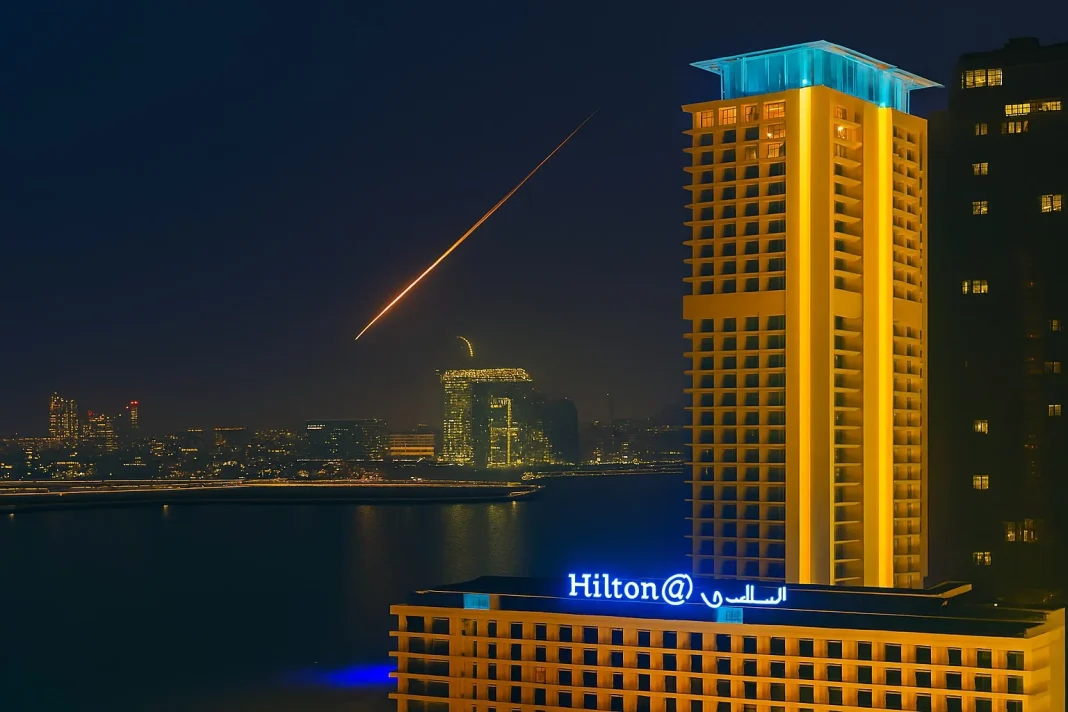



The confirmation of Ali Khamenei’s passing marks the end of an era spanning nearly four decades in the Islamic Republic of Iran and establishes an unprecedented turning point in the security architecture of the Middle East. The operation, described by the Pentagon as a precision action aimed at degrading the regime’s command and control capabilities, occurred in a context of escalating warfare that has transformed hybrid warfare into an open conventional conflict. The power vacuum generated by the disappearance of the Supreme Leader raises critical questions about the continuity of the theocratic system and the stability of global energy markets.
Historically, the figure of Ali Khamenei represented the orthodoxy of the 1979 Revolution, consolidating absolute power through the Revolutionary Guard and a regional influence network extending from Lebanon to Yemen. His mandate was characterized by constant defiance of Western powers and the development of a nuclear program that, in 2026, reached critical enrichment levels according to IAEA reports. The disappearance of the highest religious and political authority occurs at a time when Iran’s internal security structure faces its greatest test of operational resilience.
Tactical Deployment and Confirmation of Ali Khamenei’s Death
The joint military operation between Israeli air forces and United States strategic assets struck high-value targets in Tehran, including government complexes and communications bases. The confirmation of Ali Khamenei’s death by Iranian state television ended hours of speculation regarding his whereabouts, following the preliminary announcement by President Donald Trump.
Western intelligence agencies monitored movements at the Beit Rahbari complex prior to the incursion, ensuring the strike was surgical to minimize collateral damage. Nevertheless, Ali Khamenei’s death has been reported alongside that of other high-ranking military commanders, indicating a significant decapitation of the Iranian power structure’s leadership.
Security Council Emergency Protocol
Following the strikes, the Security Council of the Persian nation convened an extraordinary session to manage the institutional crisis. Iranian legislation stipulates that, in the absence of the Supreme Leader, a succession process supervised by the Assembly of Experts must be activated in an atmosphere of maximum internal tension.
The first official mention of Ali Khamenei in this new scenario came from the elite military body, which declared a state of martyrdom and called for national unity. The role of the Security Council will be decisive in preventing internal factions from initiating a struggle for control over strategic assets and the country’s missile arsenal.
Immediate Impact on the Global Energy Market
Volatility in Brent and West Texas Intermediate reached levels not seen since the 2022 crisis, with a 12% increase in the first hours following the attack. The possibility of a closure of the Strait of Hormuz, as a symmetrical response from the remnants of the Revolutionary Guard, keeps analysts on high alert for potential supply disruptions.
Ali Khamenei’s economic legacy was marked by resistance to sanctions, but the collapse of the chain of command could destabilize hydrocarbon production. International stock markets have reacted with a flight to safe-haven assets, while gold recorded historic highs at the close of trading in London and New York.
| Indicator | Pre-Attack Value | Post-Confirmation Value | Variation |
|---|---|---|---|
| Brent Crude Oil (USD) | 84.50 | 97.20 | +15.02% |
| Gold (Troy Ounce USD) | 2,150 | 2,480 | +15.34% |
| Iran Inflation Rate (Est.) | 45% | 72% | +27.00% |
| Nikkei 225 Index | 38,400 | 36,200 | -5.72% |
Realignment of Proxy Militias in the Region
The disappearance of Ali Khamenei directly affects the financing and tactical coordination of groups such as Hezbollah, Hamas, and Shiite militias in Iraq. These actors rely on the religious legitimacy and the flow of resources that emanated directly from the office of the Supreme Leader, which is now deactivated.
Military intelligence has detected troop movements in southern Lebanon and the Golan Heights area, suggesting an attempt at a decentralized response. Without the figure of Ali Khamenei to act as the final arbiter, a fragmentation of the strategic priorities of these armed organizations is likely in the short term.
Analysis of Repercussions and Structural Impact
The end of Ali Khamenei’s mandate represents the greatest challenge for the Islamic Republic since its founding in 1979, as it simultaneously faces external aggression and a succession crisis. The power structure, designed to gravitate around a single individual with divine and political authority, shows signs of fatigue in the absence of an heir with the same institutional weight.
Internationally, the death of Ali Khamenei could open a window of opportunity for a renegotiation of the regional order, or otherwise plunge the area into a prolonged war of attrition. The response of the Security Council and the capacity of the Revolutionary Guard to maintain internal control will be the factors that define whether Iran moves toward forced reform or toward a systemic collapse with global consequences.