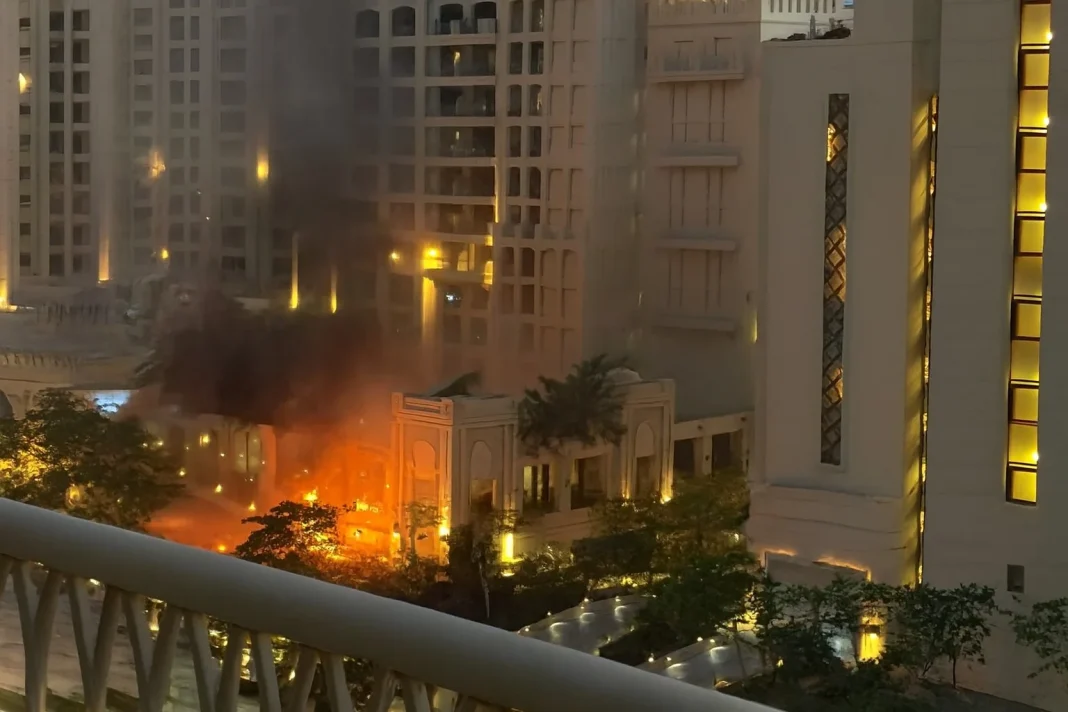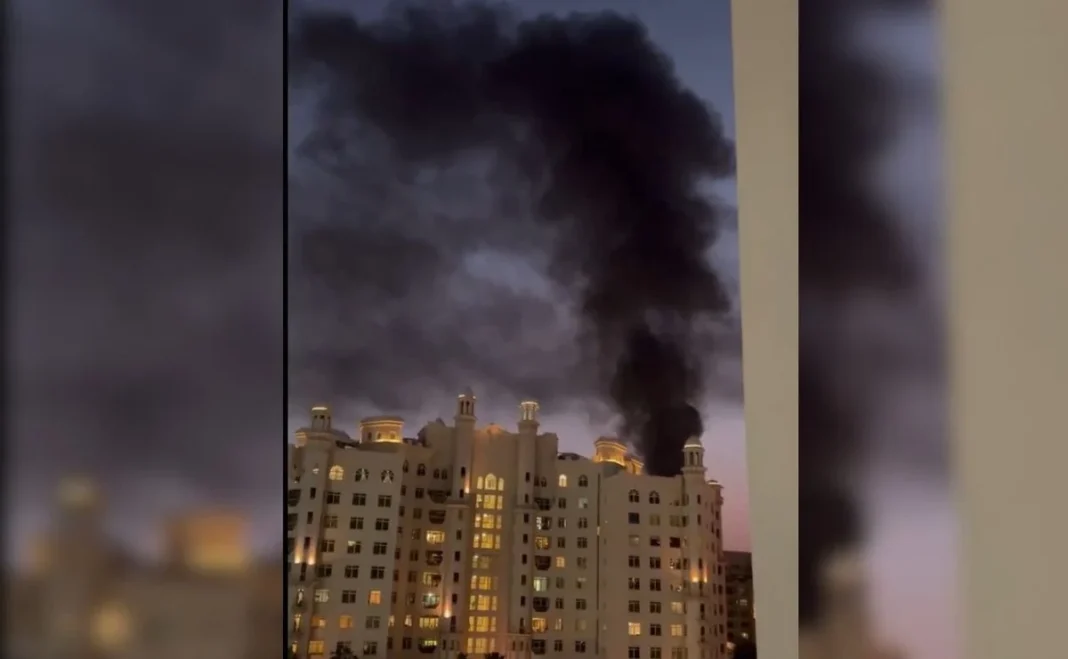


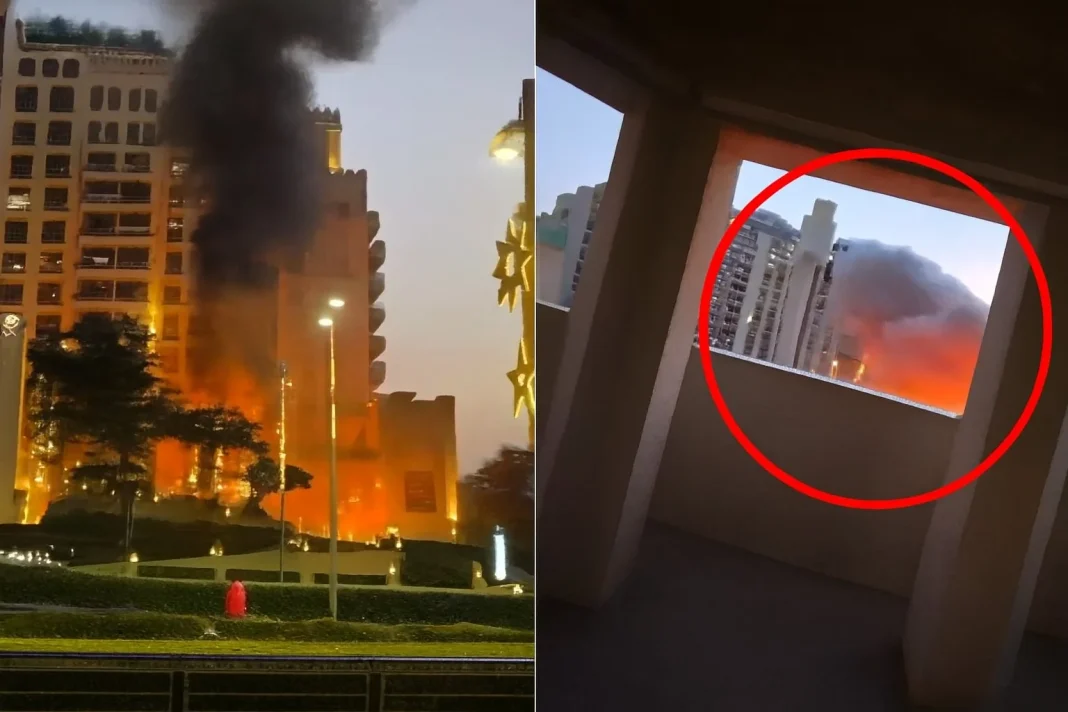
The recent escalation of hostilities in the Persian Gulf has reached a critical turning point following the impact of projectiles in high-density tourist areas in Dubai. This incident occurs within a framework of unprecedented regional tension, where the active neutrality of the United Arab Emirates is compromised by the proximity of military operations between international coalition forces and Iran. The security of strategic assets and civilian infrastructure on the Palm Jumeirah peninsula now represents a primary concern for sovereign risk analysts.
From a technical perspective, the vulnerability of iconic structures in Dubai to asymmetric attacks has been studied by Western intelligence agencies over the last two years. The sophistication of air defense systems, while robust, faces the challenge of saturation by swarms or low-trajectory vectors. The event recorded at the Fairmont The Palm hotel not only involves considerable structural damage but also alters the perception of legal and physical security that has underpinned the region’s economic growth over the last decade.
Technical Analysis of Vulnerability in Palm Jumeirah
The impact recorded at 11:27 local time suggests the use of a short-range ballistic missile or a cruise vector with low-altitude radar evasion capabilities. The precision of the strike on the Fairmont hotel structure underscores a targeting capability that has put Dubai‘s defense services on high alert. Ballistics experts indicate that the black smoke trail and the magnitude of the initial detonation are consistent with fragmentation warheads designed to maximize psychological impact in urban environments.
This event has forced the immediate activation of emergency protocols at Dubai International Airport, resulting in the diversion of more than 40 commercial flights to secondary airfields in Oman and Saudi Arabia. The disruption of air traffic in one of the world’s most important logistical hubs generates direct losses estimated in millions of dollars for every hour of inactivity, affecting global supply chains.
Defensive Deployment and UAE Response
Following the incident, the Ministry of Defense has reinforced the deployment of anti-missile batteries along Dubai‘s coastal perimeter. The objective is to shield points of economic interest against the possible use of ballistic missiles by pro-Iranian militias operating on the periphery of the conflict. Coordination with the United States Central Command (CENTCOM) has intensified to integrate real-time satellite data and improve early interception.
Dubai’s security strategy has shifted toward point defense, prioritizing desalination plants, power plants, and luxury residential complexes that house the expatriate community. The presence of warships near Emirati territorial waters confirms that the region has ceased to be a rear-guard zone and has become an active theater of operations. The stability of the federation now depends on its ability to intercept threats before they penetrate urban airspace.
Impact on Financial Markets and the Tourism Sector
Volatility in the Dubai stock market has surged by 15% in the sessions following the attack, reflecting investor nervousness over a potential capital flight. The hotel sector, which represents a substantial part of non-oil GDP, faces massive cancellations that could reduce occupancy by 30% for the current quarter. Credit rating agencies are reviewing the outlook for the emirate’s major real estate developers.
Currency flow analysis shows selling pressure on the dirham, although the Central Bank has intervened to maintain parity with the US dollar. Market confidence in Dubai as a safe haven is facing its severest test since the 2008 financial crisis. The institutional response is focused on issuing statements of calm, while on the ground, debris removal efforts in Palm Jumeirah continue under strict military security measures.
| Economic / Technical Indicator | Pre-Attack Value / Status | Post-Attack Value / Status | Variation |
|---|---|---|---|
| DFM Index (Dubai Stock Exchange) | 4,120.50 pts | 3,502.40 pts | -15.0% |
| Brent Crude Price (Barrel) | 84.20 USD | 96.50 USD | +14.6% |
| Palm Jumeirah Occupancy | 92% | 64% | -28.0% |
| Air Alert Status | Level 1 (Low) | Level 4 (Maximum) | Critical |
| Risk Premium (CDS 5Y) | 45 bps | 110 bps | +144.4% |
Analysis of Repercussions and Structural Impact
The attack in Dubai represents the breach of the implicit non-aggression pact that allowed the emirate to flourish as a global business hub in a volatile region. The impact on the Fairmont hotel is a geopolitical message that transcends material damage; it signals that no asset, however iconic or protected, is invulnerable in the current conflict architecture. Dubai authorities are forced to recalibrate their foreign policy, weighing the benefits of their alliance with the West against the risk of direct reprisals on their territory.
In the long term, rebuilding Dubai‘s image as a safe destination will require massive investment in technological defense and high-level diplomatic efforts. If ballistic missile incidents become recurring, the city-state model based on tourism and services could enter a phase of structural stagnation. The international community watches with caution, understanding that security in Dubai is the definitive thermometer of economic stability in the contemporary Middle East. The current order has been altered, and the emirate’s resilience will be tested in the coming months.