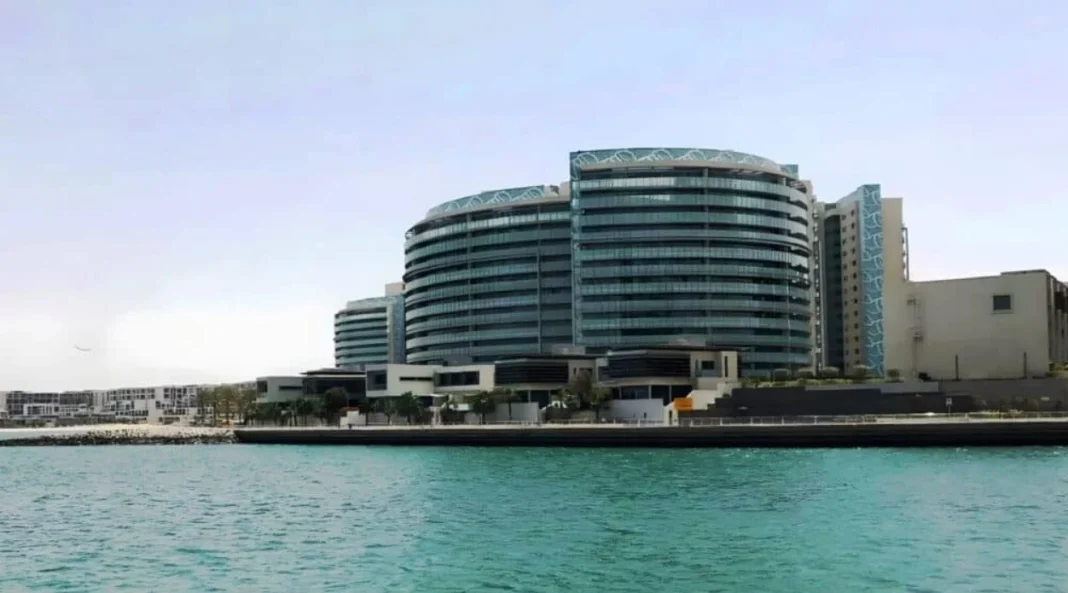


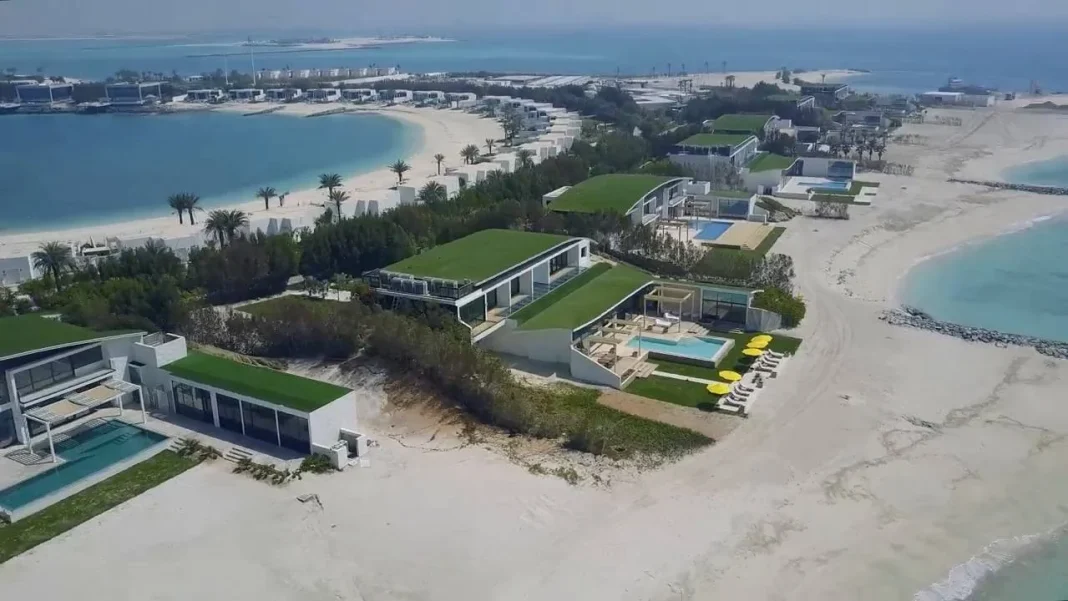
Nurai Island is not a tourist destination, it’s a safe surrounded by turquoise water in Abu Dhabi. The large fortunes of the capital have stopped looking at national bricks to focus on this piece of land where privacy is absolute and access is restricted to private boats. You don’t come here to see and be seen, you come to shield the capital away from the eyes of the Treasury and European regulations that suffocate the traditional investor.
This silent movement has stopped being a secret this February. The data confirms that the Spanish capital flow to the Emirates skyrocketed after the publication of the latest January 2026 real estate profitability reports. While in Spain the legal security of the owner is shaky, on this island the money is not only safe, but it works on its own, generating returns that in Europe are mathematically impossible to achieve today.
The floating luxury bunker
To understand where they put the money, you have to visualize it: Nurai Island is 12 minutes by boat from Saadiyat, but in legal terms it’s on another planet. No cars, no noise and, most importantly, no curious people. It’s a boutique island with a limited number of seaside villas that operate under a hybrid model: full ownership for the investor and ultra-luxury hotel management when you don’t use it.
The appeal for the Madrid investor is not the sun, it’s the scarcity. Being an island, the supply is finite by definition; they can’t build more land. You buy an asset that, by pure geography, tends to appreciate. The villas have private pools and direct beach access, features that attract executives and celebrities who pay nightly rates equivalent to the monthly rent of an apartment in Chamberí.
Why interest is exploding now
All this has accelerated dramatically since the first week of February 2026. The reason is not tourism, it’s financial and regulatory. While Europe discusses rent caps, Abu Dhabi has consolidated its position as the most dynamic luxury market, attracting those fleeing legal uncertainty.
The trend change is explained with three hard data points from this month:
- The price per square meter of luxury on the island rose 39% year-over-year in January.
- Villa hotel occupancy neared 92% in peak season, guaranteeing passive income.
- Zero taxes on rental income and zero capital gains taxes when selling.
| 2026 Comparison | Salamanca Neighborhood (Madrid) | Nurai Island (Abu Dhabi) |
|---|---|---|
| Net Yield | 3% – 3.5% | 6% – 8% |
| Rental Taxes | 19% – 47% (depending on IRPF) | 0% |
| Legal Protection | High regulation / Squatting | Fully pro-owner |
How it affects the investor’s pocket
The mechanic is simple and brutally effective: you buy the villa and forget about management. An operator takes care of everything, from maintenance to stocking the tenants’ fridge. You just receive the quarterly transfer. For the investor accustomed to dealing with community fees, neighbor meetings, and non-payment insurance in Spain, this sounds like heavenly music. The money comes in clean, without operational headaches.
The impact on the portfolio is noticeable in the first year. With no source withholdings, the gross profit is practically the net. Plus, with the asset in dollars (the local currency is pegged to the dollar), you protect your wealth against euro fluctuations. It’s textbook diversification that many wealth managers in Abu Dhabi are actively recommending to their Spanish clients to save the fiscal year.
What this capital exodus implies
What we’re seeing is not a passing fad, it’s a structural change in the mentality of conservative Spanish money. They no longer trust local bricks. Investing in Nurai Island implies assuming that legal security has shifted thousands of kilometers to the east. Investors are voting with their wallets, moving liquidity to jurisdictions where private property is sacred and the state does not intervene in private contracts.
This phenomenon reveals deep distrust in the European market. Those who buy here are not looking for a golden retirement, they seek to protect their wealth from inflation and fiscal voracity. It’s a bet on a system that rewards investment instead of punishing it. Abu Dhabi has known how to read this European discontent and has rolled out the red carpet, offering automatic ‘Golden Visas’ for real estate investment, adding a very tempting Plan B residency.
Dispelling everyone’s doubts
Q: Can I buy the villa being 100% foreign?
R: Yes, it’s a freehold zone, the property is totally yours forever.
Q: Do I have to travel there to sign the papers?
R: No, the entire process can be done digitally or via powers at the embassy.
Q: What if I want to use my villa?
R: You have usage rights, block the dates on the calendar and enjoy it at no cost.
Q: Is it safe to send so much money there?
R: Emirati banks are among the most solvent in the world and the system is transparent.
What will happen to prices in 2026
Looking ahead, the window of opportunity won’t be open forever. Being a consolidated island, there’s no risk of oversupply crashing prices, on the contrary. Demand for ultra-luxury rentals continues to grow driven by the arrival of high-level digital nomads and the city’s global events agenda. Those who enter now still capture the upward curve.
Local analysts predict that the entry ticket will double in the next 36 months. It’s not empty speculation, it’s the law of supply and demand applied to land that can’t grow more. For the Madrid investor, the decision is binary: keep fighting against regulation at home or put the money to work on an island where profitability rules. Spanish bricks are no longer the refuge they were, and Nurai Island’s boats are sailing full.