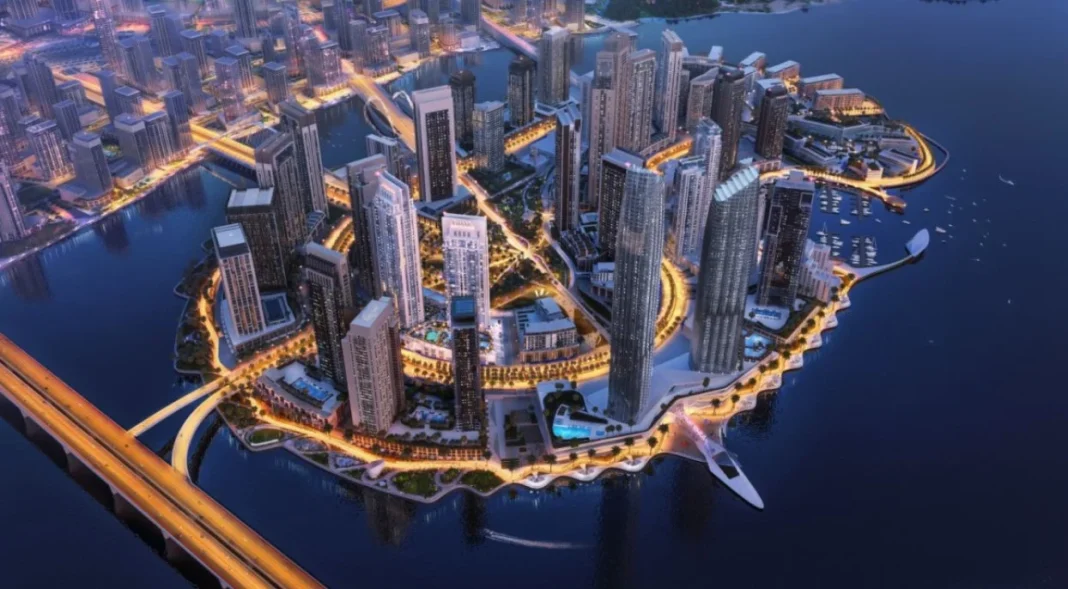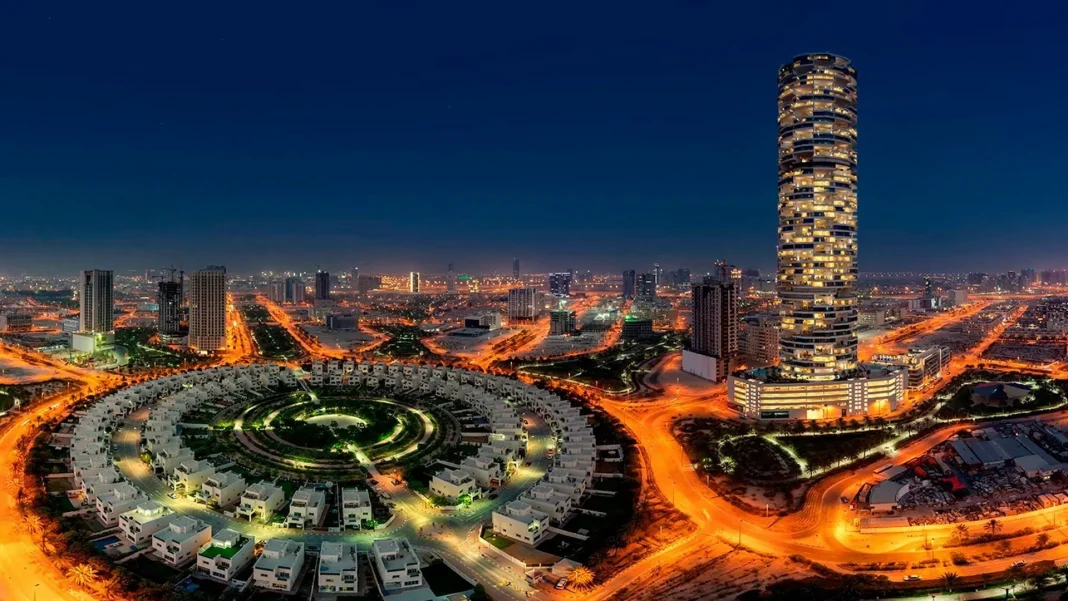


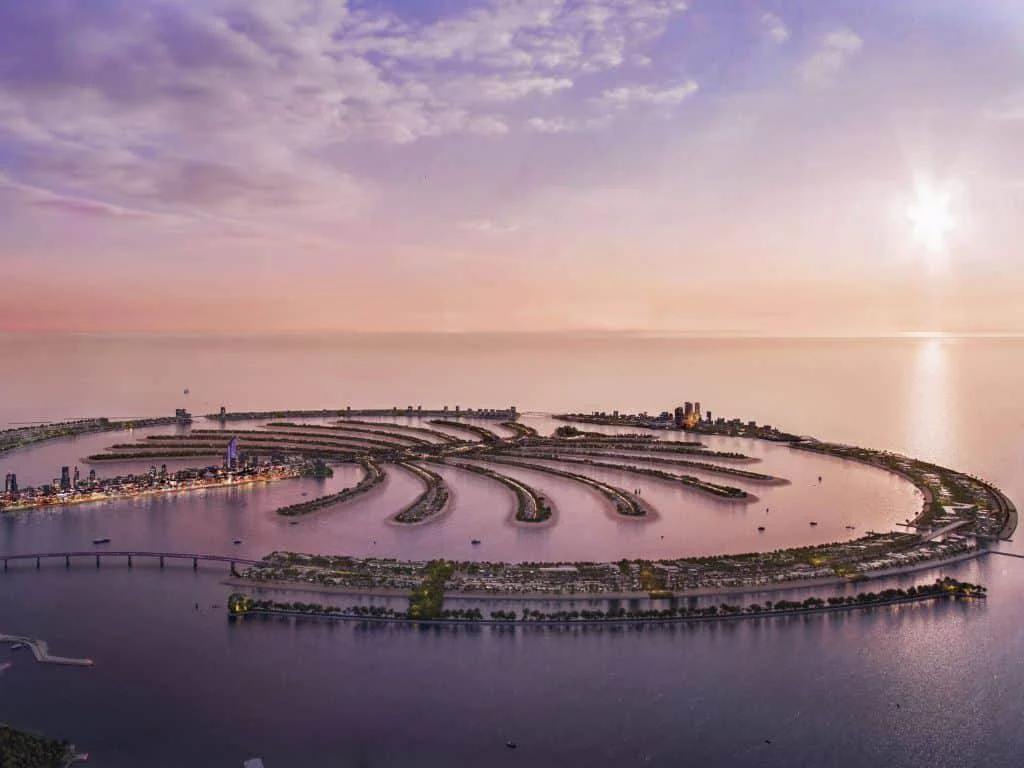
Palm Jebel Ali is Dubai’s definitive bet to replicate the real estate miracle of two decades ago. While international investors fight for scraps on the original Palm Jumeirah —where getting a villa is a lottery with a waiting list— the new island offers something the market considered extinct: buying beachfront during construction phase without speculative markup. The timing is brutal.
On January 20, 2026, Nakheel announced the sale of 2,000 villas under development, starting from 18 million dirhams. It’s the first time in 15 years that a project of this magnitude opens massive presale without immediate sellout. Deliveries begin in 2027 with 110 kilometers of new coastline, five times the surface area of Palm Jebel Ali compared to the original. The window of opportunity to enter “on the palm” will close within months.
The island that resurrected after 18 years frozen
Palm Jebel Ali was born in 2002 as the older sister of Palm Jumeirah. The project was paralyzed in 2008 after the global financial crisis, becoming a symbol of truncated ambition. For almost two decades, the ghost structure floated visible from satellite but inaccessible to investors. Everything changed in 2023 when Nakheel reactivated construction with 25 billion dirhams of confirmed investment.
The difference from the original Palm is architectural and commercial. It incorporates 80 resort hotels, a 15-kilometer integrated commercial zone, and marinas on each frond. The villas include direct access to private beach, something that only 40% of properties on Palm Jumeirah have. The model copies what worked but eliminates the saturation and lack of services errors that hindered the first phase.
Why it’s exploding now
The conjunction of three factors makes February 2026 a pivotal moment. First: absolute scarcity on Palm Jumeirah with inventory depleted since October 2025. Second: Nakheel needs to sell quickly to finance phase two of the project, opening a price window without speculative inflation. Third: confirmed deliveries from 2027, a realistic timeline that generates confidence after decades of ghost projects in Dubai.
- Official announcement January 20, 2026: Nakheel launches presale of 2,000 villas, first massive opening since 2012
- Palm Jumeirah scarcity: Zero available inventory, waiting lists from 8 months, resales 25% above original price
- Confirmed deliveries 2027-2028: Public schedule with quarterly phases, PWC audit validating progress
- Adjacent free zone: Jebel Ali Free Zone 4 km away, guarantees permanent corporate demand
| Indicator | Palm Jumeirah 2025 | Palm Jebel Ali 2026 |
|---|---|---|
| Available inventory | 0 units | 2,000 villas |
| Villa entry price | 22M AED (resale) | 18M AED (off-plan) |
| Average waiting list | 8-12 months | Immediate availability |
| Estimated delivery | N/A | 2027-2028 |
| Project size | 25 km coast | 110 km coast |
How it affects investors and residents
The launch completely redistributes Dubai’s real estate investment map. Buyers who bet on Palm Jumeirah in 2010-2012 face a dilemma: keep an asset that already quintupled in value or rotate capital toward the new island with intact growth margin. For long-term residents, Palm Jebel Ali offers what the original lost: a planned community without tourist saturation, where 60% of owners will be residential versus 30% on the first palm.
Facing this, secondary developers see the door closed. Boutique projects in Jumeirah Bay or Bluewaters lose attractiveness when Nakheel places 5 times more coast at the same unit price. The problem hits speculative resellers: inventory accumulated on the original palm became obsolete before official presale without premium. The consequences are immediate: 15% drop in resale prices on Palm Jumeirah in the last three weeks, according to Dubai Land Department data.
What it means for the 2026 real estate market
Beyond the specific operation, Palm Jebel Ali reveals a structural change in Nakheel’s strategy. The developer abandons the model of limited launches with artificial hype (200 units sold out in hours) to bet on massive volume with transparent pricing. This democratizes access to premium product that historically remained in the hands of ultra-rich or connected speculators. The mechanism behind it is financial: Nakheel needs constant cash flow to complete infrastructure without debt, preferring lower margin with high turnover.
This move redefines expectations for 2026-2030. If Palm Jebel Ali meets schedule and absorbs 2,000 sales in 18 months, it validates that the Dubai market has real absorption capacity beyond specific bubbles. Projects like Deira Islands or Dubai Waterfront —paralyzed since 2009— could reactivate with a similar model. The macro implication is clear: Dubai transitions from speculative development to scale urbanism comparable to Miami or Singapore.
Dispelling doubts we all have
Q: Is it safe to buy off-plan after the failed projects of 2008?
A: Nakheel has a track record: it delivered 100% of Palm Jumeirah and The World. Additionally, escrow law protects payments with quarterly audit.
Q: Does the 18 million AED include all costs or are there hidden charges?
A: Base price. Add 4% DLD registration, 2-3% commission, optional furniture. Real total: 19.2M AED minimum.
Q: Can I resell before delivery if I need liquidity?
A: Yes, active secondary market. But Nakheel clause penalizes with 15% if you sell before 50% construction completed.
Q: What’s the difference between outer and inner fronds?
A: Outer: open sea views, price +12%. Inner: protected canal, ideal for families, base price.
What will happen to the window of opportunity
The next six months will set the absorption pace. If Nakheel sells 500 villas before July 2026, it will activate the premium phase with 20% higher prices on outer fronds. The official schedule indicates that the first 1,000 units close presale in Q2 2026, leaving the second 1,000 for the second half with confirmed price adjustment. Institutional investors already made their move: sovereign funds from Singapore and Saudi Arabia bought blocks of 50+ villas in January.
Meanwhile, Palm Jumeirah will consolidate its position as a mature low-risk asset, with stable rental yields of 4-5% annually but limited capital growth. The new palm will capture aggressive investor profile seeking the same multiplier that the original generated between 2010-2025. The countdown has already begun: when cranes finish the first frond in 2027, the entry price will have risen 30% above today’s launch.