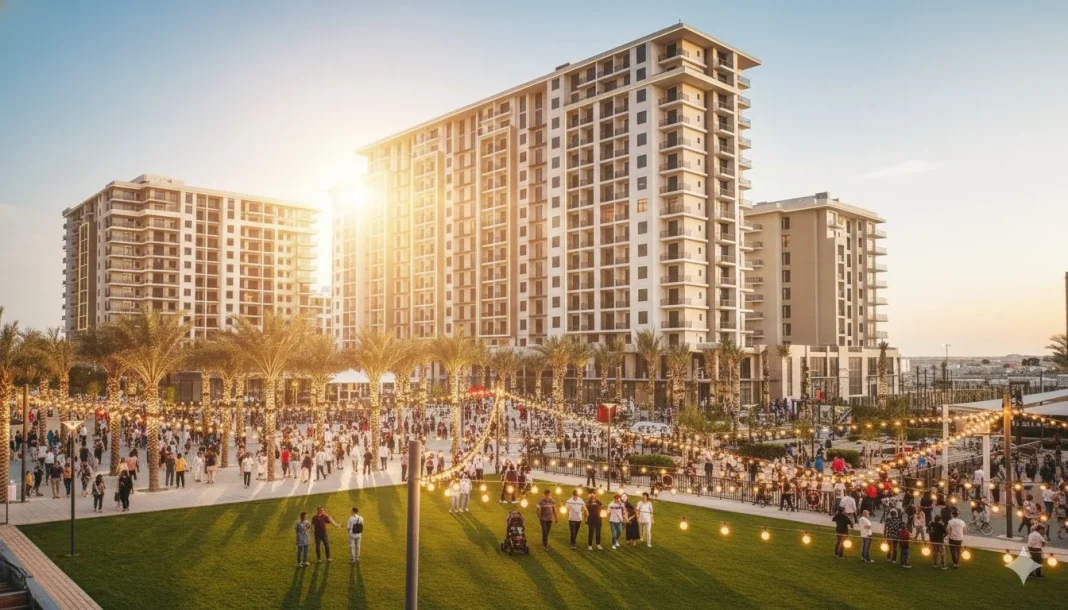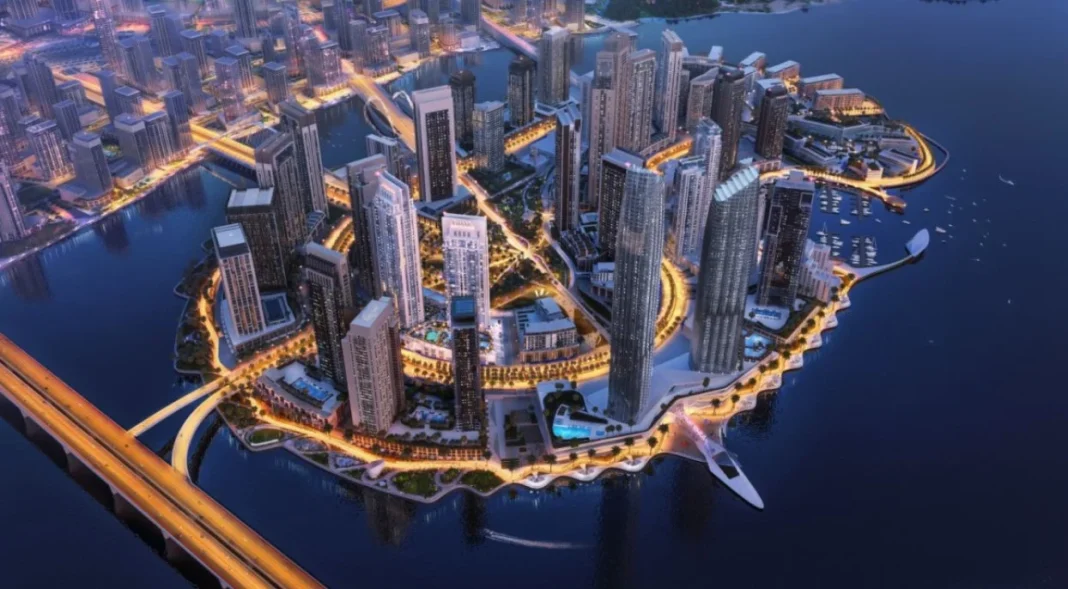


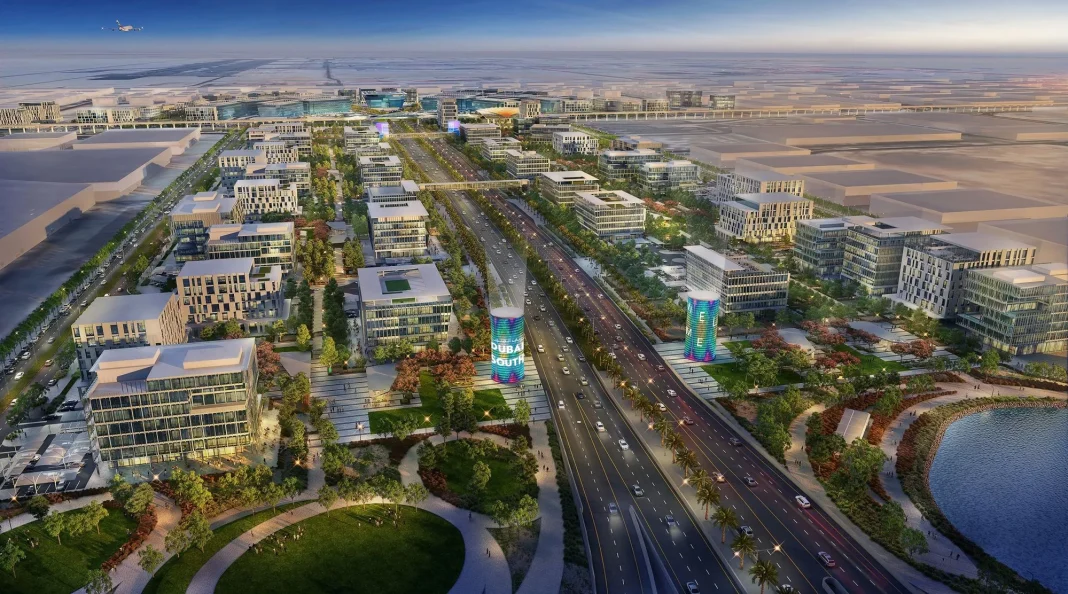
Dubai South is not just any neighborhood. It is the land where the world’s largest airport is being built right now, and those who fail to see it as a real estate opportunity will be left out of the cycle. The logistics zone adjacent to Al Maktoum International Airport is becoming a residential city designed for employees, families, and expatriates seeking more affordable prices than central Dubai. The problem? That discount will disappear within months.
On December 22, 2025, the General Civil Aviation Authority confirmed that full construction of the new terminal officially begins in 2026, with an investment of 128 billion AED ($34.85 billion USD). The date is now set. The expansion projects capacity for 260 million annual passengers by 2034, tripling the traffic of the current Dubai International Airport. This makes Dubai South the future’s most important residential, commercial, and logistics hub in the Emirates.
The Project That Changes a City’s Geography
Al Maktoum International Airport is not a cosmetic expansion. We’re talking about five runways, 400 boarding gates, and a surface area that quintuples the size of the current airport. The scale is absurd: the new terminal will occupy 36,000 acres (14,400 hectares), positioning it as the largest airport ever built. This is not Dubai thinking about tourism: this is Dubai rewriting global logistics.
The expansion turns Dubai South into an aerotropolis: a planned city around the air hub where millions of workers will live 15 minutes from the terminal. This implies massive residential development in an area that still has accessible land today. The Emirati government is betting on 1 million residents in the area by 2034, which drives housing demand before the cranes finish their work.
Why It’s Exploding Now as a Real Estate Opportunity
The confirmation of construction starting in 2026 acts as a price catalyst. Until December 2025, Dubai South was a future promise. Since January 2026, it’s a concrete schedule. Real estate developers accelerated launches of residential projects after the official announcement, and European and Latin American demand grew exponentially.
Market signals are clear:
- Gross rental yields above 7%, according to recent market analysis
- Off-plan projects with 2026-2027 delivery already exceed 2024 launch prices
- Villas starting at 3.2 million AED ($871,000 USD), 40% less than central Dubai areas
- Dubai Metro expansion will reach Dubai South in 2026, connecting directly with the airport
| Indicator | Data | Date |
|---|---|---|
| Airport investment | $34.85 billion | 2024-2034 |
| Passenger capacity | 260 million/year | 2034 projection |
| Projected population | 1 million residents | 2034 |
| Rental yield | +7% gross | 2026 |
| Metro connection | Phase 1 inauguration | 2026 |
How It Affects Buyers Who Wait Too Long
Timing is critical. Those who buy land or off-plan property in January-February 2026 still access pre-construction prices. But when the first excavators enter the site, developers will adjust rates reflecting real demand. Dubai’s real estate history demonstrates this pattern: Downtown Dubai tripled prices between the Burj Khalifa announcement and its inauguration.
The problem worsens when institutional investors enter late. European and Asian investment funds are already exploring Dubai South, and when they buy at scale, they displace individual buyers. This happened in Dubai Marina between 2008-2012: those who arrived late paid 150% more for identical properties. The window of opportunity is measured in quarters, not years.
What Living in a Real Aerotropolis Means
Beyond the airport, Dubai South functions as a multimodal logistics hub: it integrates air cargo, ground transport, future rail connection, and proximity to Jebel Ali port. This structure reduces costs in global supply chains, attracting e-commerce companies, pharmaceutical distribution, and high-value logistics. Employment generated by these companies fuels sustained residential demand.
The paradigm shift is clear: Dubai South goes from being a “southern industrial zone” to becoming a self-sufficient satellite city. Residential developments include British and international schools, neighborhood shopping centers, hospitals, and green areas designed for expatriate families. This replicates the model that worked in Dubai Marina and Jumeirah Lake Towers, but with prices 40-50% lower than those consolidated areas.
The 2026 market analysis reveals something important: Spanish and Latin American buyers represent 18% of total transactions in Dubai South during January 2026, compared to 7% in 2024. This jump demonstrates that the Spanish-speaking market detected the opportunity before investors from other regions.
Clearing Up Doubts We All Have
Q: Will the airport generate constant noise in residential areas?
A: Residential areas are designed 8-12 km from the main terminal, with acoustic barriers integrated into urban planning.
Q: Can I finance a purchase as a non-resident foreigner?
A: Yes, Emirati banks offer mortgages with 25-30% down payment for non-residents with verifiable income.
Q: What if the project is delayed like other Dubai mega-projects?
A: The Emirati government contractually backed timelines before Emirates Airline, whose future depends on this airport. Delays would imply an operational crisis for the national airline.
Q: Do properties generate permanent residency in the Emirates?
A: Investments exceeding 2 million AED ($545,000 USD) qualify for a renewable 10-year Golden Visa.
What Will Happen to Dubai South in the Next 24 Months
Groundwork for the new terminal begins in March 2026, according to the official schedule. This means heavy machinery traffic, temporary access closures, and reconfiguration of main roads. Real estate developers anticipate this chaos: they launch an aggressive pre-sale phase between January-April 2026 to capture buyers before construction creates visual uncertainty.
Meanwhile, Emirates Airline will begin gradual migration of operations from Dubai International Airport to Al Maktoum. The first international flights will arrive in 2027, creating immediate demand for accommodation for crews, airport staff, and logistics employees. This guarantees a stable rental market even before the airport reaches full capacity.
Meanwhile, the Dubai government accelerates complementary infrastructure: expansion of Sheikh Mohammed Bin Zayed Road highways, extension of the red metro line to Dubai South, and construction of a railway station that will connect with Abu Dhabi in 35 minutes. Those who buy today are not just betting on an airport. They are betting on the geographical reconfiguration of a city that turned the desert into a global financial capital.