

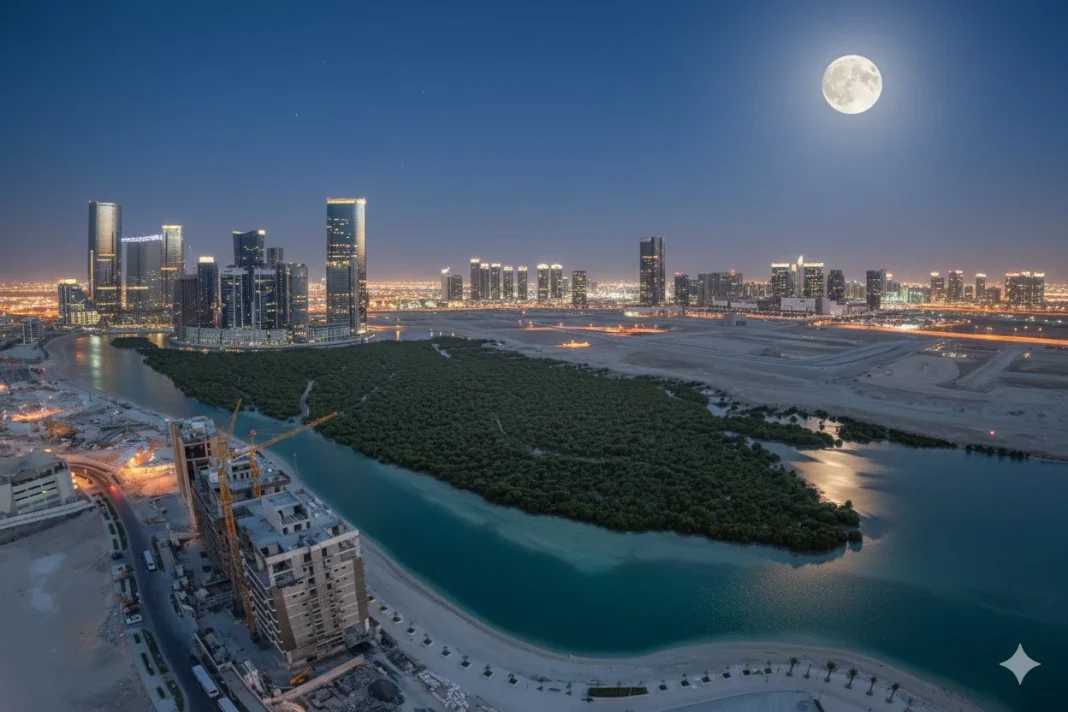
Abu Dhabi wants to stop being the oil emirate and become the global capital of artificial intelligence. While Silicon Valley deals with exorbitant costs and growing regulations, the emirate is building from scratch a city where every traffic light, building, and service runs on AI. Cranes are already working and the first companies have signed contracts.
The announcement came in January 2026 when the Emirati government confirmed that Aion Sentia will be operational in 2027, barely 18 months later. Hub71, Abu Dhabi‘s tech ecosystem, closed its latest round: 26 startups selected, 81% powered by AI, with access to free offices, golden visas, and Emirati sovereign wealth funds.
The City That Thinks for You
Aion Sentia is not your typical smart city. It’s a cognitive city: an urban organism with its own operating system that learns from its inhabitants. Each resident will have a digital twin that anticipates needs and manages services before requesting them. Traffic lights that adapt to traffic in real time, buildings that adjust temperature based on occupancy, and hospitals that diagnose before symptoms appear.
Miral leads the project with an investment exceeding $8 billion in the initial phase. G42, the Emirati AI giant, has already signed agreements to install its data centers. The infrastructure will allow processing exabytes without latency.
Why It’s Exploding Now
Abu Dhabi detected that the window is closing. The United States is tightening restrictions on Chinese tech companies, Europe is regulating AI with a heavy hand, and Asia is looking for neutral alternatives. The emirate positions itself as a technology free zone without political interference or corporate taxes. Three moves confirm this:
- Hub71 accelerated recruitment in February 2026: 26 startups selected in one month, compared to 15 in all of 2025
- Spain already has a presence: eVoost AI signed a €1.4 million round in September 2025 led by Emirati sovereign wealth funds
- Golden visas issued grew 340% between January 2025 and January 2026 in the tech sector alone
- Microsoft and OpenAI are negotiating the installation of LLM model training centers in the Masdar City free zone
| Source | Metric | Data |
|---|---|---|
| Hub71 | Accelerated startups 2026 | 26 in 1 month |
| UAE Government | Tech golden visas | +340% year |
| eVoost AI | Investment received | €1.4M |
| Aion Sentia | Initial budget | $8,000M |
| Hub71 | Startups with AI | 81% total |
How It Affects Spanish Entrepreneurs
Spanish startup eVoost AI closed real estate contracts worth $2 billion in its first year operating from Abu Dhabi. The Hub71 ecosystem connects with investor networks, provides access to Tech Stars, and positions companies in a market estimated at $200 billion through 2030.
The package surpasses any European accelerator: free offices in premium areas for two years, direct connection with sovereign wealth funds, golden visa for founders and family members, and zero taxes on profits. All in exchange for setting up before Aion Sentia opens in 2027.
The Gulf already attracts 12,000 tech startups in the DIFC Innovation Hub alone. Abu Dhabi competes by offering an entire city designed from scratch so that AI is infrastructure, not an add-on.
What It Means for the Global Tech Market
Abu Dhabi forces a structural change in how startups choose where to grow. Renting office space for 10 people costs $15,000 per month in San Francisco; in Abu Dhabi it’s free for two years. Taxes on profits in California hover around 30%; in the emirates they’re zero.
The bet goes further: capturing the market for artificial intelligence applied to strategic sectors. Health, energy, finance, and climate technology are priorities. 81% of the startups accelerated in 2026 work in AI for these sectors. They’re not looking to compete in social networks: they go straight to critical infrastructure.
The timing is key. China restricts access, the United States blocks collaborations with Asian companies, and Europe takes years to regulate. Abu Dhabi offers itself as neutral territory where Western and Eastern companies operate without friction. The emirate signed agreements with more than 180 countries for protection of technology investments.
Dispelling Doubts We All Have
Q: How does the golden visa work?
A: 10-year renewable residency for founders, direct family members, and key employees, without the need for a local sponsor.
Q: What about intellectual property?
A: Abu Dhabi signed international treaties that protect IP under Western legislation, with specialized courts in DIFC.
Q: Are there cultural restrictions for foreign entrepreneurs?
A: Free zones like Hub71 operate under international regulations; local restrictions on dress or behavior do not apply.
Q: What sectors do they prioritize?
A: AI applied to health, fintech, renewable energy, agritech, and climate technology; they reject generic consumer apps.
What Will Happen When Aion Sentia Opens
The real test will come in 2027 when the first residents move in. If the urban operating system delivers on its promises, oil will take a back seat in the Emirati economy before 2030. Abu Dhabi generates 15% of the national GDP today; the goal is for the tech sector to contribute 25% in four years.
The battle to attract startups intensifies. Singapore, Estonia, and Portugal compete with tax advantages, but none offers an entire city designed for AI. The coming months will define whether the emirate achieves its goal or if Aion Sentia ends up being another underutilized Gulf project.
The question is not whether Abu Dhabi will diversify its economy: it’s whether it will do so fast enough to lead the global tech industry. Cranes work 24 hours; European and Asian startups evaluate relocations; and Silicon Valley watches as a sand desert attempts to become a server desert.