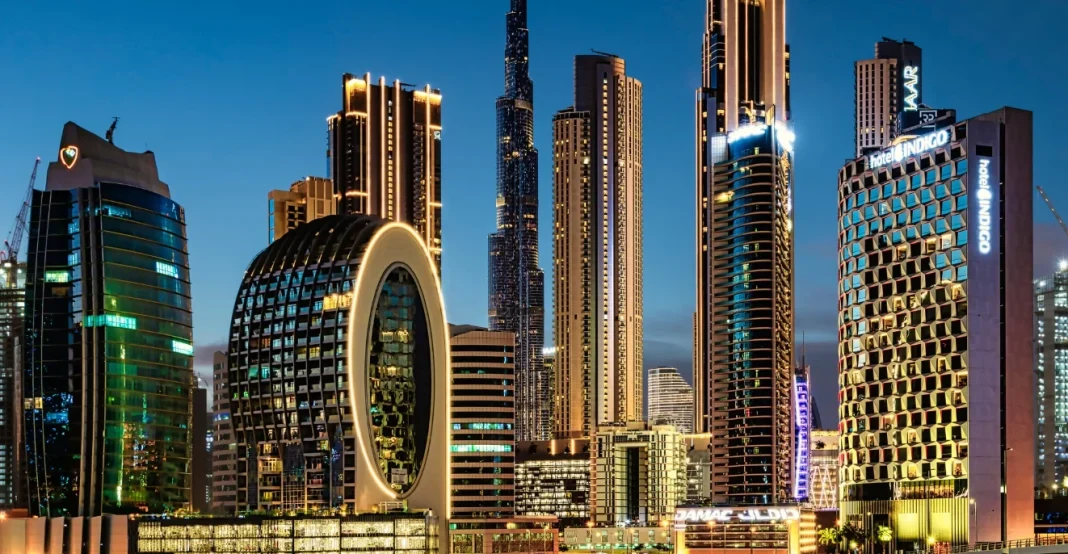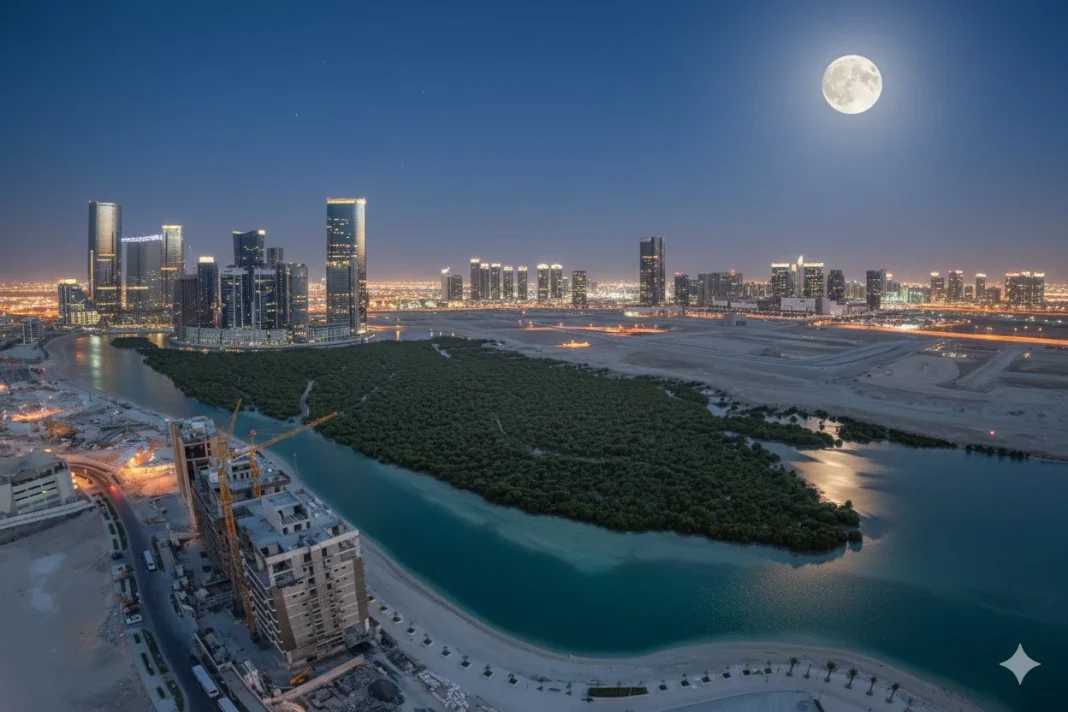


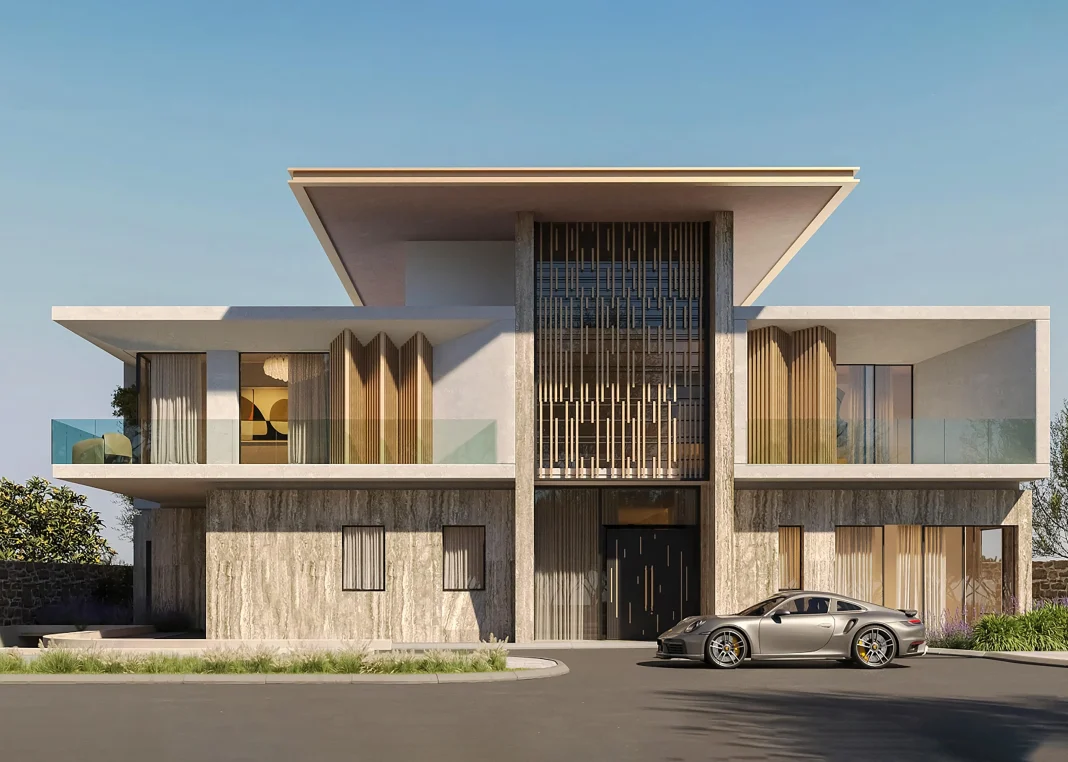
Hudayriyat Island promises what no other development in the Emirates has achieved: mansions with sea views from artificial hills reaching 50 meters in height. The concept breaks the traditional formula of flat villas facing the coast, introducing reliefs that add perspective and exclusivity to a market saturated with horizontal proposals. The bet awakens inevitable comparisons with Emirates Hills, but with a brutal difference: here, the sea is the protagonist.
The project accelerates in February 2026, with foreign investors securing positions while Abu Dhabi presents tax incentives and extended residency visas. The master plan revealed in June 2023 contemplates adding 53.5 km of new coastline to the capital’s landscape, including 16 km of beaches. The combination of artificial height and maritime access creates a product without direct competition in the Gulf, just as Hudayriyat Island positions itself as a strategic alternative to Dubai’s saturation.
The what: elevated mansions with the Gulf at their feet
The artificial hills concept at Hudayriyat Island transforms Abu Dhabi’s traditional flat topography into a terraced landscape where each villa occupies different elevation levels. Properties on the upper strata will enjoy 360-degree panoramas spanning from the marine horizon to the Emirati capital’s skyline. This configuration allows more units to access privileged views without competing for beachfront.
Dredging and soil engineering have been fundamental to raising these structures on compacted sand and imported rock, using satellite technology to precisely mold the reliefs. The island already has functional sports infrastructure, including an indoor velodrome and permanent cycling circuits. The design integrates more than 200 km of bike lanes and trails connecting residential areas with protected natural spaces.
Why it’s exploding now: the anti-Dubai formula that seduces
Abu Dhabi launched in February 2026 a campaign targeting European and Asian investors, promoting quality of life against Dubai’s overcrowding. The timing responds to three converging factors that trigger interest:
- Dubai saturation: Emirates Hills reached prices of 85 million dollars per mansion, pushing out mid-to-high profile buyers who now look to Abu Dhabi
- 2026 tax incentives: 10-year residency visas for investments exceeding 2 million dirhams, effective since January
- Completed infrastructure: The velodrome and 600-meter public beaches already operate, proving the project advances at real pace
- Institutional adoption: Major real estate managers like Sorouh develop mixed projects on nearby artificial islands
| Indicator | Metric | Data |
|---|---|---|
| Added coastline | Kilometers | 53.5 km |
| New beaches | Kilometers | 16 km |
| Bike lanes | Kilometers | 200+ km |
| Hills height | Meters | 50 m |
| Residency visa | Years | 10 years |
How it affects: the premium buyer changes emirate
Faced with this scenario, Dubai brokers report growing inquiries about alternatives in Abu Dhabi since late 2025. The migration of investment capital particularly hits saturated developments like Palm Jumeirah, where unit density complicates resale and communities lose exclusivity. Buyers seek differentiation, and Hudayriyat’s hills offer exactly that: a visually identifiable product that cannot be easily replicated.
The impact also reaches Latin American and Spanish investors, historically focused on Dubai, who now explore Abu Dhabi attracted by more accessible initial prices. Pre-sales in early phase allow entry from 1.5 million euros for villas with views, an unattainable figure in Emirates Hills where the entry point hovers around 4 million. This price gap democratizes access to Emirati luxury without sacrificing quality or services.
What it implies: structural change of coastal luxury in the Emirates
Beyond the hills themselves, Hudayriyat Island reveals a strategic shift in how Abu Dhabi competes for foreign investment. While Dubai bets on verticality and density, the Emirati capital chooses long-term planning and low density, preserving mangrove ecosystems and creating natural reserves integrated into residential developments. This model attracts a more mature, less speculative buyer profile that prioritizes quality of life over rapid appreciation.
The mechanism behind is clear: Abu Dhabi builds its competitive advantage on differentiation, not on volume. The artificial hills are the tangible symbol of this strategy, an architectural element that transforms perceptions and generates conversation in international markets. The bet will work if it manages to position the island as an aspirational destination, not just as a cheap alternative to Dubai.
What will happen: the new reference for emerging luxury
Looking ahead, Hudayriyat Island will define whether Abu Dhabi can snatch market share from Dubai in the ultra-premium segment. The next 18 months will be critical: Phase 1 deliveries and the first residential occupancies will test whether the “hills with sea” concept works in practice or remains in spectacular renders. International brokers are already preparing tours for VIP buyers, a sign that the market takes the proposal seriously.
Meanwhile, Emirates Hills watches closely. Its historical advantage—the Dubai brand—now faces competition from a product that offers something genuinely different. If Hudayriyat manages to position itself as the sophisticated and less crowded option, we could see the beginning of a capital migration toward the Emirati capital that redefines the luxury real estate map in the region. The battle between artificial hills with sea and inland hills without coast has just begun.