

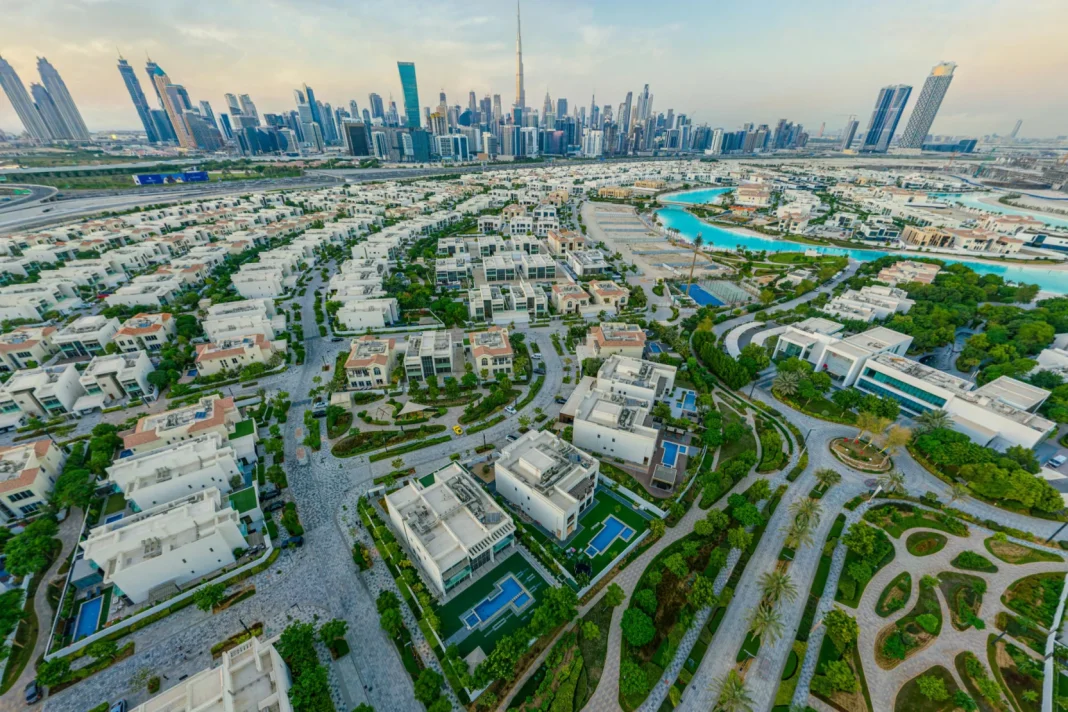
MBR City has found the formula so that living without a coast doesn’t mean giving up turquoise water. Communities with filtered artificial lagoons sell out before construction is finished, with waiting lists that close within weeks. The appeal isn’t just aesthetic: these properties appreciate faster than traditional villas next to golf courses.
The trend exploded in January 2026, when real estate market data revealed that gated communities with artificial lakes exceed demand compared to golf developments. Sobha Hartland II sold 87% of its inventory before completing excavations. This marks a shift: buyers seek direct water access, not views of the green.
The phenomenon redefining residential luxury
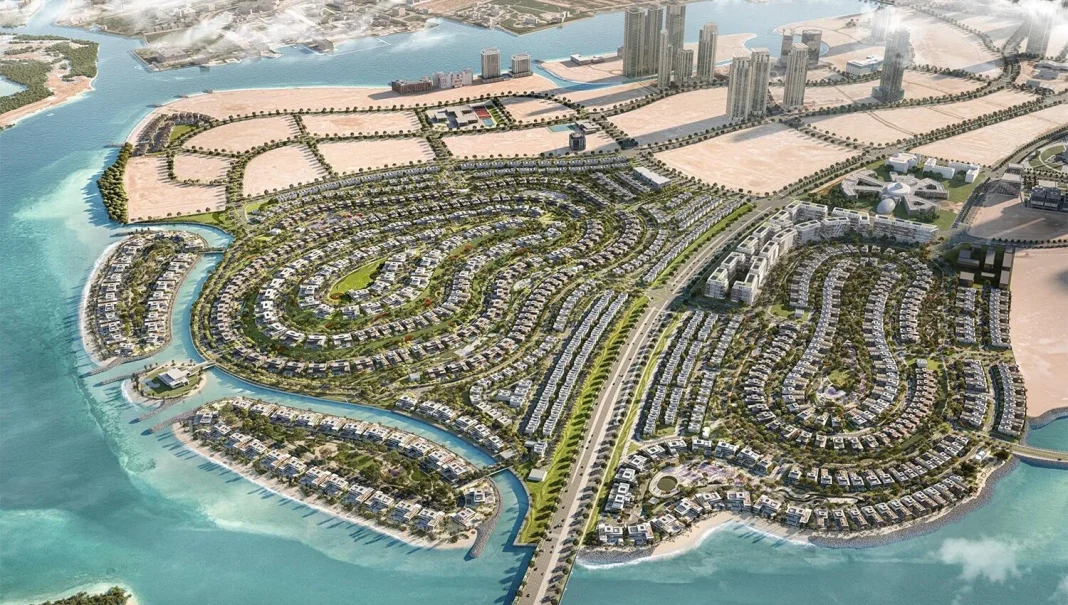
Mohammed Bin Rashid City houses the world’s largest artificial lagoon: 40 hectares of crystal-clear waters with Crystal Lagoons technology in District One. The project doesn’t imitate the sea, it improves it: constantly filtered water, controlled temperature and imported sand beaches without currents or jellyfish.
Azizi Riviera incorporated a 13-hectare lagoon at no additional cost, boosting demand by 340% according to CEO Farhad Azizi. Properties with direct lagoon views reach prices 28% higher than units without that access.
Why it’s exploding now
First quarter 2026 data confirmed what agents intuited: communities with lagoons close sales in 42 days on average, while properties next to golf courses take 67 days. The difference is brutal in a market where transaction speed measures real value.
Factors driving the trend:
- Guaranteed daily use: Lagoons accessible 365 days vs. golf courses requiring membership and tee times
- Families with children: Controlled safe beaches surpass golf courses in appeal for young households
- Visible sustainability: Filtration technology reduces water consumption by 50% compared to golf turf maintenance
| Community | Lagoon (hectares) | Average sale time | Premium vs. golf |
|---|---|---|---|
| District One | 40 | 38 days | +28% |
| Sobha Hartland II | 8 | 41 days | +25% |
| Azizi Riviera | 13 | 45 days | +22% |
| Damac Lagoons | 12 | 47 days | +19% |
| Tilal Al Ghaf | 5.5 | 52 days | +15% |
Sobha Hartland II sold 6-bedroom villas for 22 million dirhams (6 million USD) in blueprint phase, with delivery scheduled for December 2026. The waiting list closed after 11 days.
How it affects buyers and the market
The impact hits directly to the wallet of those who bought next to golf courses in the last 3 years. Those properties appreciate 8% annually, while MBR City properties with lagoons reach 11-12% annually according to Knight Frank Dubai. The gap widens each quarter.
Developers with golf-centric projects are reacting late. Trump Estates and Dubai Hills announced in February 2026 plans to add small lagoons (2-3 hectares), acknowledging that golf alone no longer sells. Premium buyers choose water over turf.
Properties in Emirates Hills (traditional golf area) report available inventory increases of 18% year-over-year, while MBR City maintains supply scarcity with less than 4% of unsold units.
What this structural change means
Beyond lagoons, this reveals a shift in the luxury buyer profile in Dubai 2026. The traditional investor prioritized exclusivity through golf courses. Today’s buyer seeks daily family experience, usable amenities and visible sustainability.
This change reflects demographic transformation: young families aged 32-45 with children represent 64% of buyers in new developments, according to Dubai Land Department. For this segment, a lagoon with kayaks exceeds the value of a golf course they’ll never use.
The global market is watching. Similar projects are launching in Abu Dhabi, Qatar and Saudi Arabia. Crystal Lagoons technology went from 12 projects in 2020 to 247 active in 2026. Dubai leads adoption, but the model is being replicated in arid climates where water is a scarce luxury.
Dispelling doubts we all have
Q: Do lagoons consume more water than golf courses?
A: No. Closed-circuit filtration reduces consumption by 50% vs. golf turf irrigation.
Q: Does maintenance increase community fees?
A: Yes, but moderately. Average increase: 180-240 dirhams/month in communities with lagoons.
Q: Can properties with lagoon views still be purchased?
A: Scarce. Only pre-sales in phases 3-4 of existing developments, delivery 2027-2028.
Q: Is the water safe for young children?
A: Totally. Constant filtration eliminates pathogens, without aggressive chemicals like concentrated chlorine.
What will happen with this trend
The next 18 months will define whether MBR City consolidates its dominance or competitors emerge. Dubai South announced in January 2026 a project with three interconnected lagoons totaling 52 hectares, doubling District One’s scale. The battle to capture premium buyers with children is just beginning.
Developers with golf-centric inventory face a reality: reconvert or accept slow appreciation. Some are exploring adding small lagoons (2-4 hectares), but immersive experience requires scale. A 40-hectare lagoon creates an ecosystem; a 2-hectare one is just a large pool.
Dubai’s 2026 real estate market speaks clearly: turquoise water sells faster than perfect greens. Families voted with their contracts, and lagoons won.