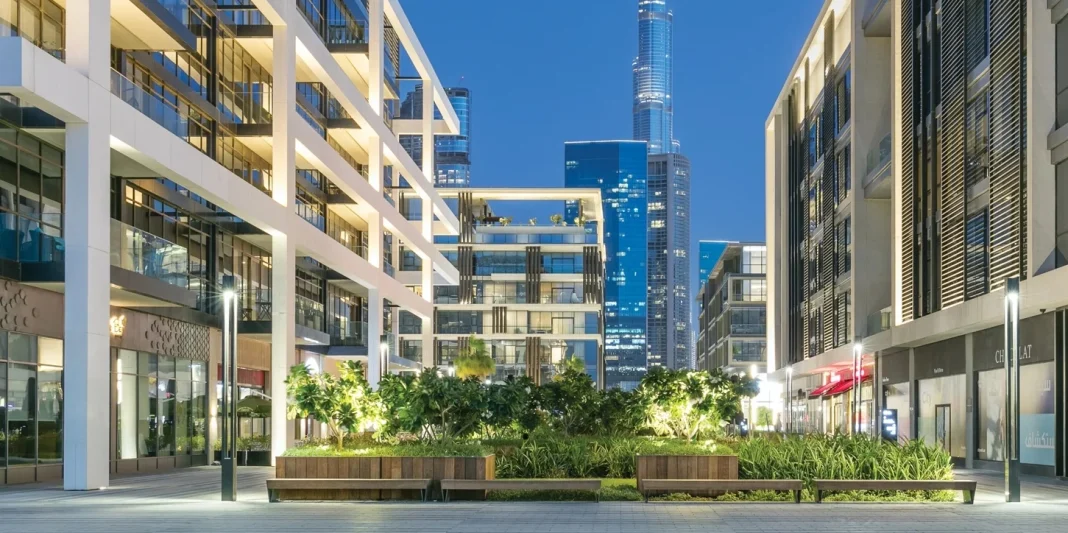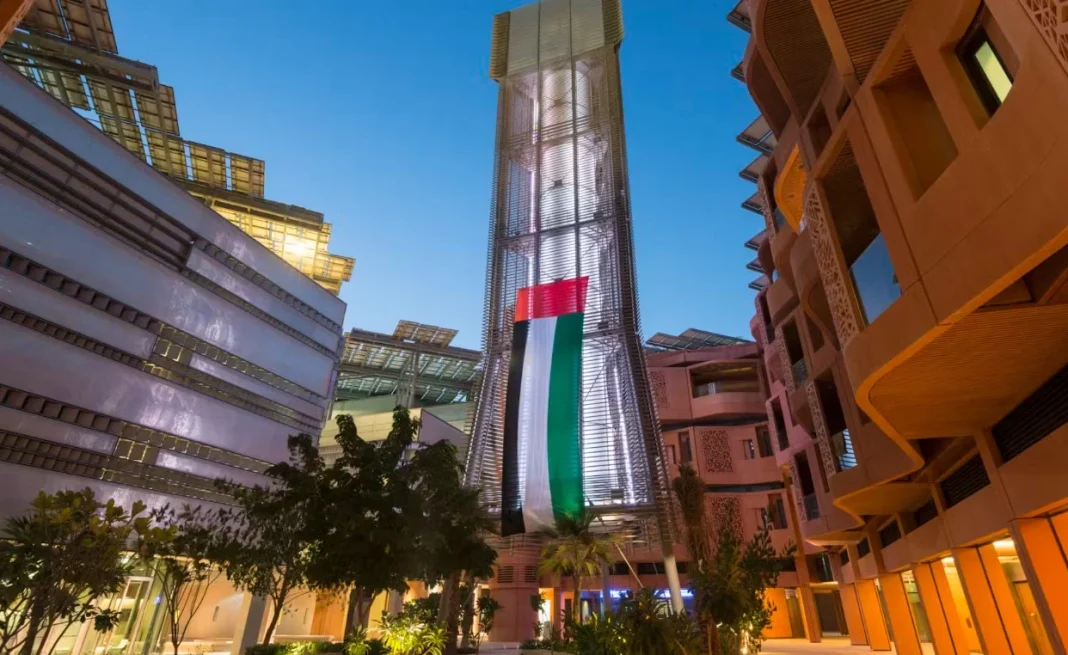


Dubai South is consolidating itself as the epicentre of the largest real estate bet in the Middle East. Buying an apartment in The Residential District or Golf Views is not just about acquiring square metres: it is about positioning yourself in the area with the highest projected growth in the United Arab Emirates while the new Al Maktoum mega airport redefines global connectivity. The figures confirm it: properties close to the future air hub have accumulated appreciations of 425% in five years, according to off-plan market data published in January 2026.
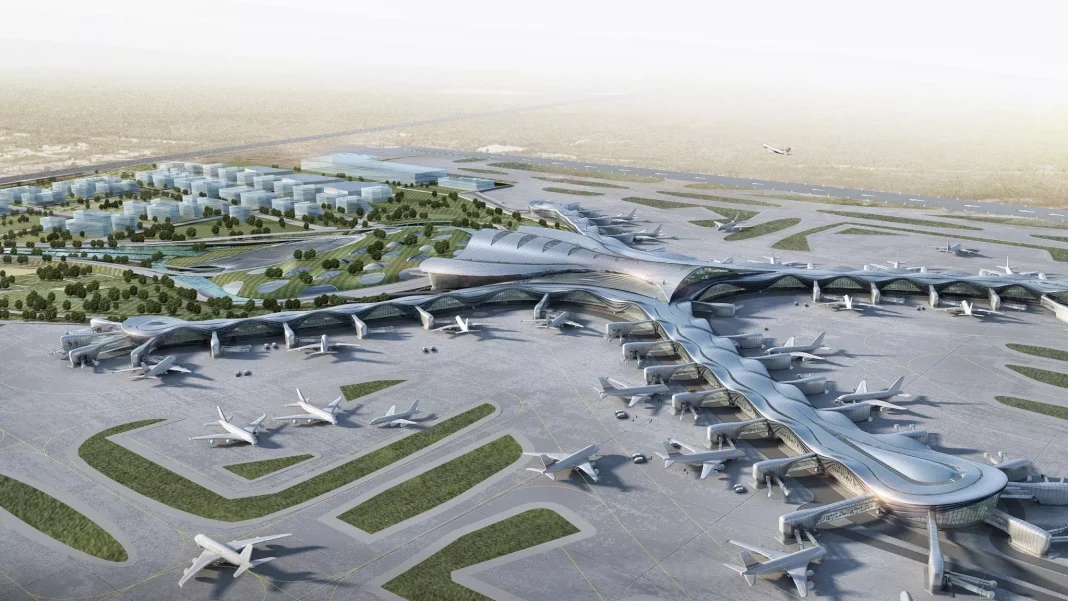
The expansion of Al Maktoum Airport (DWC) formally began in January 2026 with the first phase of a total investment of 35 billion dollars that will quintuple its current size. The project will transform Dubai South into the largest airport city on the planet, with capacity for 260 million passengers per year before 2035. This take-off turns Dubai into the destination with the greatest real estate traction in the Persian Gulf, and the residential areas adjacent to the airport concentrate the largest flow of foreign capital recorded in the last 24 months.
Why Dubai South is the district that is gaining the most value right now
The Residential District and Golf Views are part of the urban master plan surrounding the new Al Maktoum Airport, designed to absorb the full migration of Emirates and Flydubai from the currently saturated DXB. The Emirati government announced real estate projects worth 320 billion dirhams (87 billion USD) for the 2025-2028 period, mostly concentrated in Dubai South and strategic areas. This public investment guarantees connectivity infrastructure that boosts residential demand.
Properties in the 2 to 3 million dirhams range (545,000 to 817,000 USD) located in Dubai South have registered projected increases of 8-12% during the first half of 2026 due to higher demand from investors who qualify for the Golden Visa. Official data confirm:
- 761 billion AED transacted in 2024, a historic record that exceeds the previous year’s volume by 12%
- 161,000 transactions closed in 2024 with buyers from more than 190 nationalities
- 42% of total volume corresponds to off-plan properties, concentrated in Dubai South
- Projection of 150 million passengers per year in phase 1 of the new airport (2030), scaling to 260 million with full infrastructure
How the Golden Visa accelerates buying near the airport
Against this backdrop of record growth, the Emirati government relaxed in late 2024 the requirements to obtain 10-year residency through real estate investment. You now qualify for the Golden Visa with mortgaged properties if the official appraisal exceeds 2 million dirhams and you pay at least 50% of the total value certified by the Dubai Land Department, eliminating the full liquidity barrier that blocked previous applications.
This regulatory change directly impacts projects such as The Residential District and Golf Views, whose prices average between 1.8 and 2.5 million dirhams per unit. Foreign investors now combine two objectives: real estate appreciation guaranteed by public infrastructure plus a migration asset that grants legal residency without additional tax requirements. The segment of properties in the 2-3 million AED range concentrates double interest since the regulatory easing, pushing prices upwards in areas with guaranteed infrastructure projection.
Why the new airport changes the real estate game
Beyond the short-term boom, what is happening in Dubai South reveals a structural shift in the Gulf real estate market. Dubai International Airport (DXB) recorded 92.3 million passengers in 2024, consolidating its status as the airport with the most international passengers on the planet. However, DXB is physically trapped: only two runways, zero room to grow.
The new Al Maktoum Airport (DWC) in Dubai South includes five parallel runways of 4.5 km each, with the capacity to land more than four aircraft simultaneously 24 hours a day. This design maximises non-aeronautical revenues that are projected to generate more than 60% of total income, creating a self-sustaining economic ecosystem around the adjacent residential areas. As DXB progressively closes operations and moves them to DWC between 2026 and 2035, the residential areas of Dubai South will absorb demand from airline employees, logistics executives and aviation personnel who require physical proximity to the new hub.
What to expect from Dubai South in the next 24 months
Looking ahead, the construction of the mega airport marks three verifiable milestones: opening of the Phase 1 Passenger Terminal (capacity of 150 million annually) projected for 2030, progressive migration of Emirates routes from DXB starting in 2028, and delivery of the first 16 cargo terminals before 2027. These timelines turn Dubai South into an active construction zone for the next decade.
Current prices in The Residential District and Golf Views reflect projection, not completed reality: the airport does not yet receive regular commercial flights, and the adjacent commercial areas will be delivered between 2027 and 2029. Historically, properties in areas with guaranteed infrastructure double their value between signing the initial contract and handing over the keys. The 161,000 transactions closed in 2024 exceed any previous record, and the participation of foreign buyers reaches 73% of total volume, confirming that demand is structural, not speculative.
Key questions to understand everything
Q: How much does a property in The Residential District or Golf Views cost?
A: Between 1.8 and 2.5 million dirhams (490,000 to 680,000 USD) according to February 2026 listings.
Q: Can I obtain a Golden Visa when buying with a mortgage?
A: Yes, since late 2024 you qualify with mortgaged properties if the appraisal exceeds 2 million AED and you pay at least 50% upfront.
Q: When will the new Al Maktoum Airport be operational?
A: Phase 1 is projected for 2030 with capacity for 150 million passengers per year; full infrastructure before 2035.
Q: What appreciation can I expect in Dubai South?
A: Similar properties have accumulated 425% in five years; analysts project an additional 8-12% during the first half of 2026.