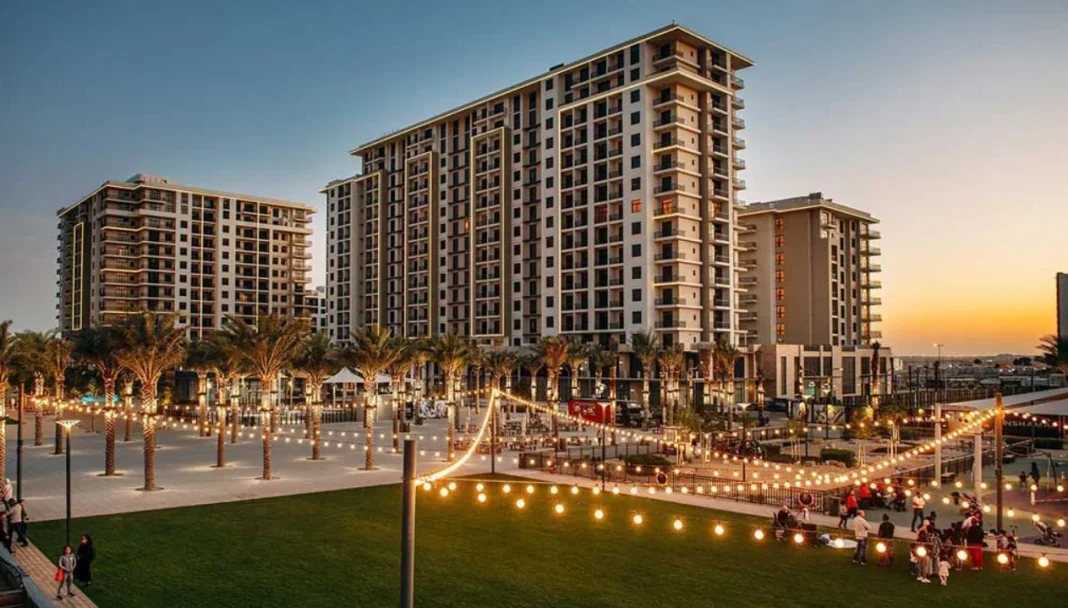



Abu Dhabi’s real estate boom is pushing international investors to decide between two radically different models: direct asset purchase or REIT participation. During the last quarter of 2024, Emirati sovereign wealth funds increased their positions in residential infrastructure by 18% year-on-year, a sign that smart money is seeking exposure to real estate. Is it safer to be the absolute owner of a single asset or to own fragments of multiple professionally managed buildings?
This dilemma becomes relevant when analyzing that real estate investment trusts (REITs) listed in the region delivered average dividends of 6.2% in 2024, while the gross return on direct ownership hovers around 8% but before expenses. The problem arises when discovering that many investors ignore hidden costs that transform that theoretical return into figures very different from those expected.
Two models, one goal: real estate profitability
REITs (Real Estate Investment Trusts) function as baskets of securities that group dozens of income-generating properties, allowing you to buy “shares” of shopping centers, logistics warehouses, or luxury residences without acquiring a physical property. In contrast, direct ownership requires disbursing millions of dirhams for a single asset that depends exclusively on personal management. Interestingly, both options compete in the same Emirati market with different tax rules that alter the final result.
The appeal of REITs lies in their immediate stock market liquidity: you can unwind positions in seconds as if you were selling Telefónica shares. Direct ownership, however, requires sales processes that in Abu Dhabi can extend six to nine months, a time horizon incompatible with rapid capital needs. This reality determines who can afford each option according to their risk profile and treasury needs.
However, owning a REIT implies relinquishing operational control, as external managers decide which properties to acquire or divest, charging annual fees of 0.75% to 1.5% on managed assets. Direct ownership grants the power to decide on specific revaluations, value-adding renovations, or rental strategies, but requires time dedication equivalent to a part-time job. Do you prefer to be a passive shareholder or a real estate entrepreneur?
Liquidity versus tangible real estate
Faced with this scenario, investors must evaluate which version of “being an owner” fits their desired exposure to the Emirati market. The liquidity offered by listed vehicles contrasts radically with the structural illiquidity of the individual apartment, where capital remains trapped until the final signing of the deed.
✓ Instant diversification: A single REIT allows you to be exposed to 40-60 properties simultaneously, while your capital in a direct purchase depends on the success of a single zip code.
✓ Entry barriers: Entering a REIT requires a minimum of 500-1,000 euros; acquiring minimum square footage in Abu Dhabi requires initial disbursements exceeding 300,000 euros.
✓ Differential leverage: Direct owners can mortgage up to 70% of the value, multiplying returns. REITs are already internally leveraged, limiting additional leverage effect for the small investor.
✓ Regulatory transparency: REITs must legally distribute 90% of profits as dividends, guaranteeing regular flows that the direct owner does not ensure when facing a delinquent tenant.
The taxation that changes the rules of the game
This situation worsens when we analyze tax efficiency between both formats in free zones such as ADGM (Abu Dhabi Global Market). While dividends from listed REITs are usually taxed as capital income in Spain at rates of 19% to 28%, direct international ownership allows applying depreciation deductions of 3% annually on the cadastral value.
The relevant fact is that Abu Dhabi does not apply income taxes to non-resident individuals, nor equivalent property tax on properties in designated zones, which partially equalizes the tax burden between both vehicles. However, the direct owner can structure ownership through offshore vehicles optimizing inheritance succession, an advantage that REIT shareholders do not directly control.
Maintenance, community, and insurance expenses on a physical apartment can erode 2-3% annually of gross return, while REITs internalize these costs within their expense ratios. The real tax problem arises when selling: REITs are taxed as capital gains on shares, while direct real estate ownership can benefit from Spain-Emirates double taxation treaties more advantageously if ownership is correctly structured.
Daily management and hidden costs that erode profitability
Beyond the tax problem, the next obstacle hits when the investor discovers that being an owner implies active management. A REIT eliminates calls from the doorman, plumbing breakdowns, or tenant changes, delegating everything to professional teams that charge their fees but free up personal time. Direct ownership requires hiring rental agencies that take 8-10% of gross rents, in addition to periodic maintenance costs in buildings that demand Emirati quality standards.
Interestingly, REITs available in emerging markets tend to concentrate on high-yield commercial and industrial assets, sectors inaccessible to the small direct investor who can only aspire to standard residential. This explains why in Abu Dhabi trust returns sometimes exceed those of individual apartment purchases intended for traditional residential rental.
The next challenge appears with volatility. REIT shares fluctuate daily with the stock market, falling 15% in stock market corrections even though tenants pay on time. The value of a physical apartment in the Emirati capital does not oscillate with such violence, offering nominal stability that reassures conservatives, although the lack of liquidity prevents materializing quick gains when facing alternative opportunities.
The future of Spanish capital in the desert
The next obstacle hits when we project toward 2025 and beyond. The Abu Dhabi 2030 master plans foresee the incorporation of 15,000 new luxury residential units in areas such as Saadiyat and Al Maryah, potentially saturating certain market segments. REITs, with the ability to rotate portfolios quickly, can unwind positions in saturated neighborhoods and reinvest in logistics or data centers, flexibility that the direct owner does not have.
Analysts predict that real estate asset tokenization will arrive in the Emirates before Europe, allowing the purchase of “digital fractions” of buildings with blockchain liquidity. This hybrid model between traditional REIT and direct ownership could eliminate current barriers, offering the diversification of funds with the tax control of absolute ownership.
Will the Spanish investor end up preferring the tranquility of quarterly dividends or absolute control over Emirati real estate? The answer depends on whether you seek to build tangible wealth to bequeath to your children or generate passive cash flows without breaking a sweat. In any case, the Abu Dhabi market no longer allows indefinite hesitation: choosing wrong can cost you more than the worst community expenses.