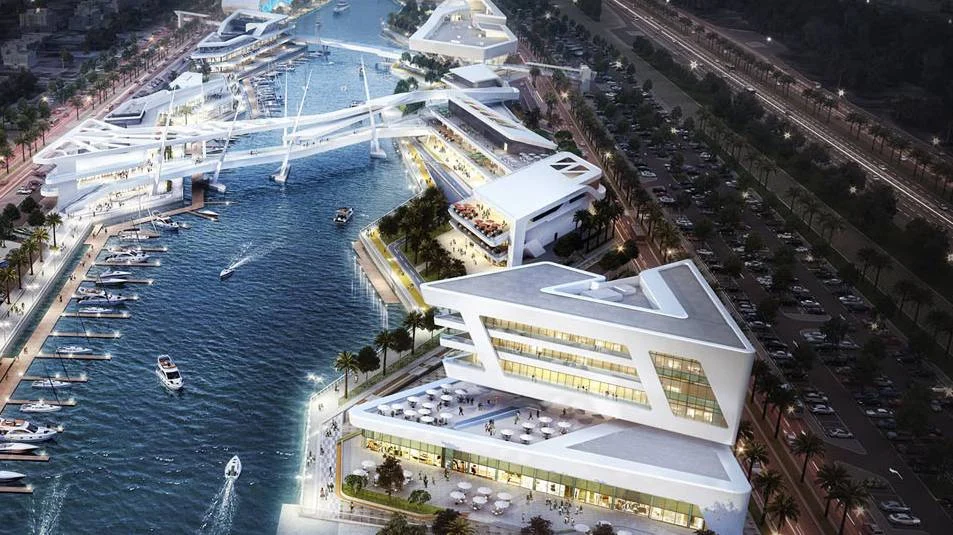


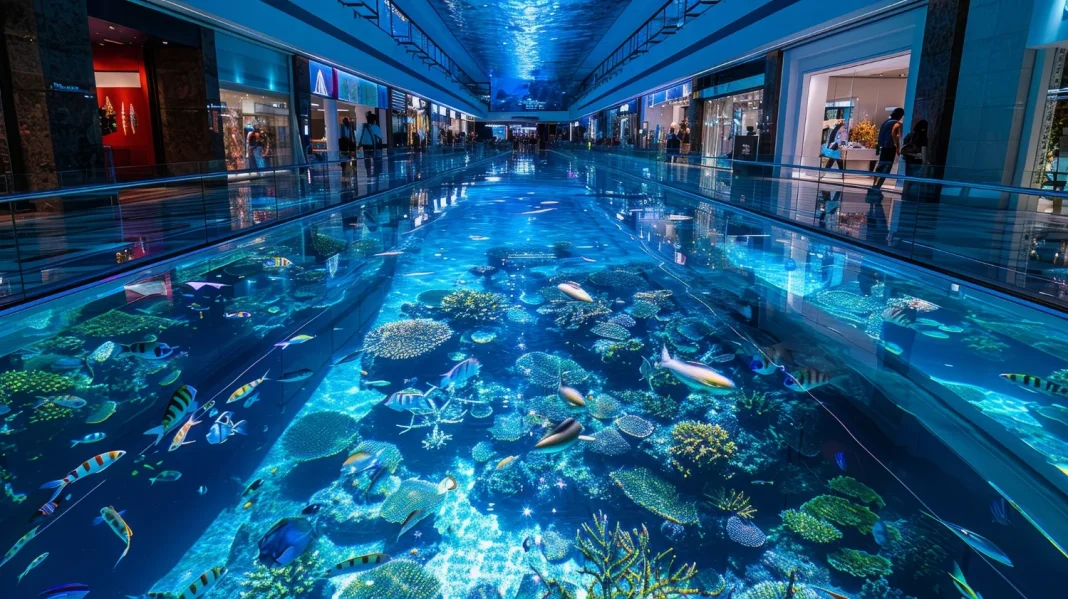
Abu Dhabi is inaugurating the most ambitious underground aquatic complex ever built, with a total investment exceeding 2.1 trillion euros and capacity to house up to 15 million marine specimens from the five oceans. The infrastructure, located in the Sheikh Zayed district, represents the largest experiential tourism project undertaken by the United Arab Emirates in the last decade. This architectural milestone promises to radically transform the tourism sector in the region, with projections pointing to operating margins of 156% per year and an increase of 189% in the immersive attractions segment.
The development has been conceived as a direct response to the growing demand for distinctive tourist experiences in the Middle East. The Emirati authorities have opted for a unprecedented facility that combines technological innovation with marine conservation, setting new global standards in this field. The scale of the project reflects the country’s economic diversification strategy, which seeks to reduce its dependence on hydrocarbons through disruptive bets in the services sector.
Record dimensions and underwater architecture
The complex extends over 12 hectares distributed across three underground levels that descend to 42 meters below sea level. The main structure incorporates panoramic tunnels made of reinforced glass with a thickness of 35 centimeters, designed to withstand pressures of up to 8 atmospheres and to offer 360-degree views over the recreated marine ecosystems. These corridors add up to a combined length of 3.7 kilometers, far exceeding the dimensions of any similar facility currently in operation.
The central area houses a cylindrical tank 18 meters high and 50 meters in diameter, capable of holding 22 million liters of salt water treated through state-of-the-art filtration systems. This space serves as the main habitat for large pelagic species, including whale sharks, giant mantas and schools of bluefin tuna. Engineers have implemented computer-controlled artificial currents that simulate natural ocean conditions, ensuring the well-being of the specimens and reducing stress by 73% compared to conventional facilities.
Biological diversity and differentiated themed zones
The initial collection comprises more than 680 species distributed across nine themed ecosystems that recreate environments as diverse as the Indo-Pacific coral reefs, the cold waters of the Arctic Circle or the abyssal depths. Each zone features specific lighting that mimics natural sunlight cycles, including simulations of sunrise and sunset that regulate the circadian rhythms of the fauna. The specialized aquariums for jellyfish use laminar flow technology that keeps these organisms in constant suspension, preventing damage to their delicate tissues.
A specific area is dedicated to showcasing endemic fauna of the Persian Gulf, including hawksbill turtles, dugongs and more than 120 varieties of native fish that are rarely seen in captivity. The marine biologists at the complex develop captive breeding programs for threatened species, with the aim of reintroducing specimens into their Abu Dhabi original habitats. In addition, genetic exchange protocols have been established with another 47 aquariums worldwide to guarantee genetic diversity and prevent problems derived from inbreeding.
Economic impact and tourism projections
Preliminary estimates point to an annual footfall of 8.2 million visitors during the first three years of operation, generating direct revenues exceeding 890 million euros per year. The entrance fee has been set at 78 euros for adults and 52 euros for minors, with premium packages that include guided diving experiences and supervised feeding of rays for an additional 340 euros. These premium tariffs already account for 34% of advance bookings, surpassing the initial forecasts of the projected business model.
✓ Direct creation of 2,400 specialized jobs in the management of aquatic facilities
✓ Indirect generation of 11,600 positions in the hospitality, transport and associated services sectors
✓ Increase of 23% in hotel overnight stays in the Sheikh Zayed district
✓ 41% growth in turnover for restaurants and shops within a 3-kilometre radius
✓ Capture of 670 million euros per year in average visitor spending on complementary services
Applied technology and operational sustainability
The complex integrates biometric monitoring systems that track in real time the behaviour of 340 key specimens through subcutaneous chips and non-invasive external sensors. These devices transmit data on swimming patterns, heart rate and cortisol levels, making it possible to detect stress or disease situations before visible symptoms appear. The information is processed by machine learning algorithms that automatically adjust environmental variables such as light intensity, water currents or feeding frequency.
The filtration systems combine mechanical, biological and chemical methods distributed across 18 treatment towers that process 840,000 litres per hour each. The full water renewal cycle is completed every 6.2 hours in the main tanks and every 3.8 hours in the smaller aquariums, ensuring nitrate levels below 5 ppm and constant crystal-clear transparency. The biological filters host colonies of nitrifying bacteria cultivated over 14 months prior to the opening, ensuring the stability of the nitrogen cycle from the first operational day.