

Pixel, the mixed-use development designed by Dutch studio MVRDV, represents a radical transformation of the concept of urban living in Abu Dhabi. Completed in 2024, this 85,000-square-meter complex moves away from traditional Emirati luxury to embrace a contemporary philosophy based on creativity and community. The project does not seek to impress with marble or golden finishes, but to inspire through spaces that stimulate collaboration among professionals, entrepreneurs, and artists.
This ecosystem is part of the Makers District, located on Abu Dhabi’s Reem Island, conceived as the new creative heart of the Emirati capital. The proposal responds to a growing demand from a new generation of professionals who value authenticity, connection, and an environment that boosts their ideas over material ostentation.
An architectural design that fosters interaction
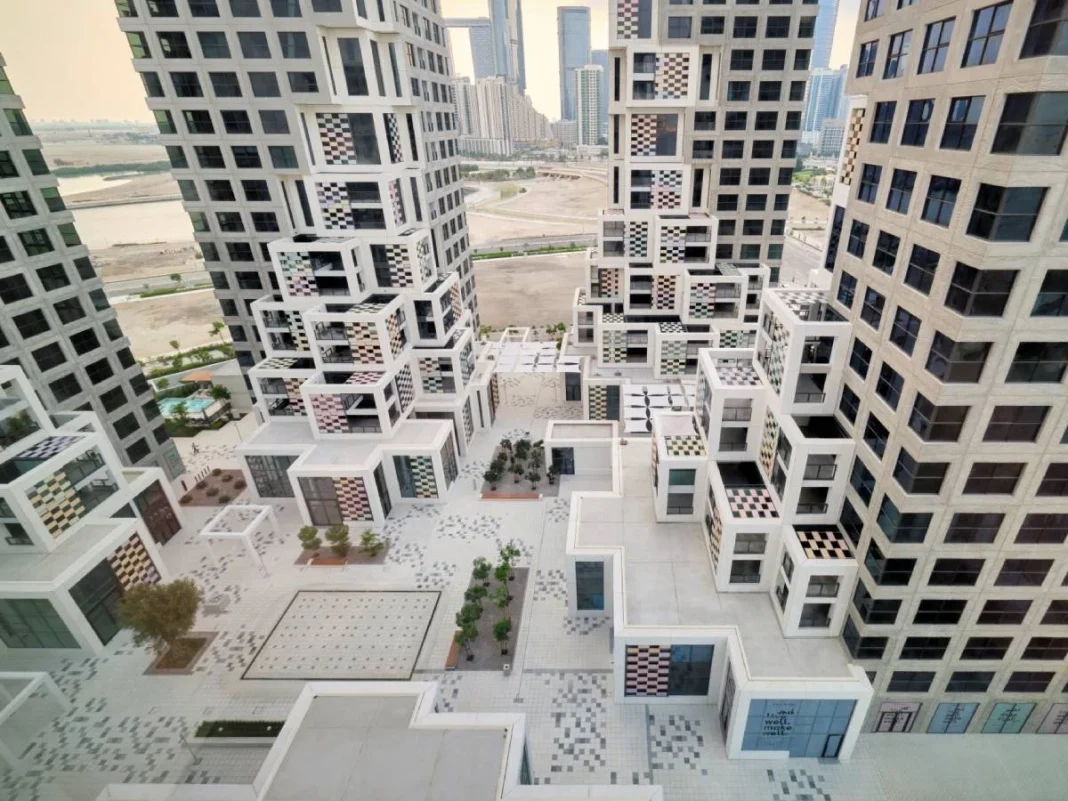
The seven mid-rise towers that make up Pixel are strategically arranged around a vibrant pedestrian plaza, creating what the architects describe as an urban “topography” rich in meeting spaces. This configuration is no accident: each building is positioned asymmetrically to generate natural wind tunnels and improve access to common areas. The pocket gardens between the towers act as oases of calm that encourage the spontaneous encounters essential for building community.
The complex includes 525 apartments ranging from studios to three-bedroom units, all designed with flexible layouts. The predominant materials include polished concrete and industrial-inspired finishes that reflect the functional aesthetic valued by creative professionals. In addition, the “pixelated” balconies characteristic of the design not only offer private outdoor spaces, but also create a unique visual identity that sets the project apart within the urban landscape of Abu Dhabi.
Integrated ecosystem of living, work, and leisure
The real differentiating factor of Pixel lies in its ability to integrate multiple functions in a single space. The development includes 76,000 square meters of residential area and 15,000 square meters dedicated to retail, offices, and services. This mix creates an ecosystem where work, living, and entertainment are not separate, but intrinsically connected.
The central plaza hosts a variety of services and spaces that enrich the daily experience:
✓ Coworking spaces designed to foster collaboration between residents and external professionals
✓ Art galleries and concept stores showcasing the work of local artists
✓ Restaurants and artisanal cafés that serve as informal meeting points
✓ Artists’ workshops and design studios integrated into the community
✓ Medical clinics, nurseries, and laundries to make daily life easier
This model allows, for example, a graphic designer to collaborate with a programmer living next door, or a craftsperson to exhibit their work in the plaza gallery, creating organic professional synergies.
The new creative elite of Abu Dhabi
The profile of residents attracted by Makers District differs radically from the traditional luxury property buyer in the United Arab Emirates. They are designers, tech entrepreneurs, advertisers, architects, and digital nomads who value collaboration over competition. These professionals seek an environment that reflects their dynamic, connected lifestyle, where ideas can be born in a café and materialize in the studio next door.
The development positions itself as a destination in its own right, with a permanent cultural atmosphere that goes beyond a purely residential function. The proximity to Saadiyat Island, the cultural hub of Abu Dhabi, reinforces this creative vocation. Moreover, the emphasis on pedestrian streets and high-quality public spaces represents an innovative approach in a region where car-centric developments still predominate.
Investing in creativity as an economic driver
From a real estate perspective, Pixel caters to a high-demand segment with limited supply in the Abu Dhabi market. The proposal by developer IMKAN, which considers this project the heart of the new Abu Dhabi, bets on creativity as a driver of economic value. The community-focused lifestyle and integrated services generate a strong resident retention capacity, which translates into stability for investors.
The project, whose construction began after CNTC was appointed as the main contractor, sets a precedent for future developments based on community and social sustainability. The underlying philosophy is clear: in an increasingly digitally connected world, true luxury lies in physical spaces that facilitate genuine human interaction and the exchange of ideas.