

Dubai Silicon Oasis is emerging as the least publicised yet most effective tech epicentre in the Middle East, where demand for housing for digital professionals far exceeds availability. Launched in October 2002 by Sheikh Mohammed bin Rashid Al Maktoum, this project has evolved from an experimental technology park into a fully functional smart city with more than 40,000 registered companies.
The distinctive feature of this enclave lies in its integrated model: it combines workspaces, specialised residences and research centres across an area of 7.2 square kilometres, establishing itself as a global benchmark for small and medium-sized tech companies according to the Financial Times.
The infrastructure that attracts global talent
Dubai Silicon Oasis features advanced communications via fibre optics, three data centres and eight power substations that guarantee permanent connectivity for tech operations. The government-owned free zone was strategically located 20 minutes from Dubai International Airport, facilitating mobility for international professionals. This urban design follows the 15-minute city concept, where residents can access essential services without long commutes.
The free EV charging stations installed since 2017 reflect a strong commitment to energy sustainability, a decisive factor for corporations that prioritise environmental criteria. Companies such as Fujitsu, AMD, Western Digital and Huawei operate from this hub, where the Chinese multinational is developing the first tech street in the Middle East with integrated climate sensors. The community is also home to 11 specialised industrial clusters that accelerate Dubai’s economy through collaborative ecosystems.
Residences with a waiting list for programmers
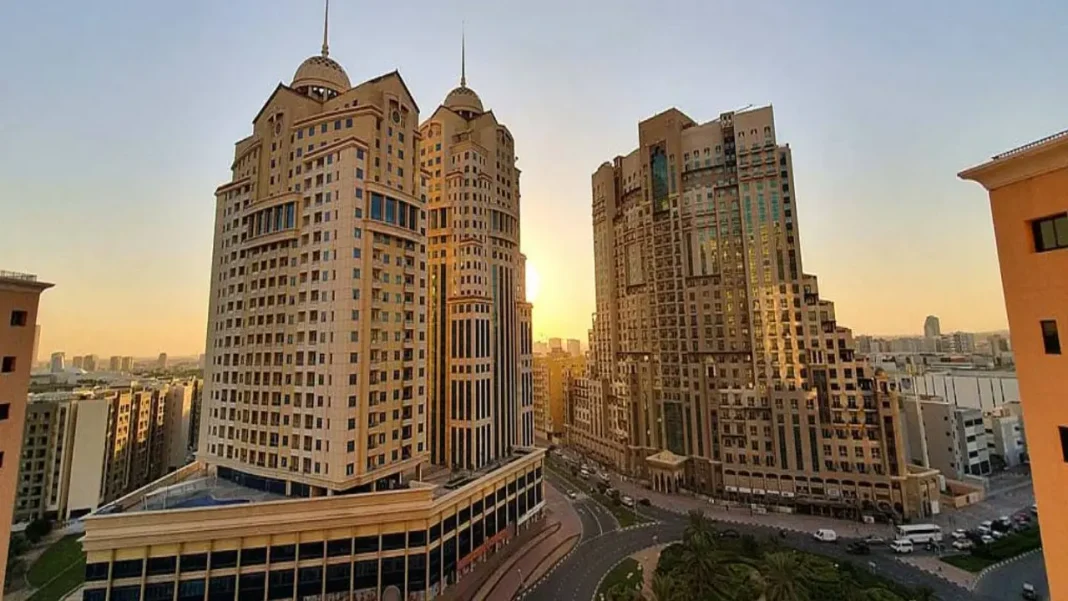
Housing demand in Silicon Oasis consistently exceeds available supply, particularly in developments such as Oasis Lofts Residences, towers specifically designed for tech professionals. The initial 560 residential villas have expanded to include tower apartments, two villa communities and student accommodation that together house more than 100,000 residents. Rental prices range from mid to high, reflecting how the market values proximity to tech employers.
✓ Apartments with advanced digital infrastructure and integrated coworking spaces
✓ Direct access to shopping centres, hospitals and educational facilities within the perimeter
✓ Guaranteed connectivity through redundant fibre-optic networks
✓ Sports facilities and public parks for work-life balance
The residential model follows the Work-Live-Study-Play philosophy, eliminating dead commuting time for the current 90,000 inhabitants, who mostly work in the tech sector.
The quiet rival to Silicon Valley
Dubai has reduced its oil dependence from 75% to 20% through economic diversification, making Silicon Oasis a key pillar of this transformation. The complex explicitly aims to compete with Silicon Valley as a global innovation centre, attracting startups through tax incentives and easy access to Asian markets. More than 30,000 companies currently operate within the ecosystem, ranging from early-stage ventures to multinational corporations.
The Dubai Silicon Oasis Authority streamlines business setup with simplified procedures, and Silicon Oasis offers free zones with 100% foreign ownership and no restrictions. The 15 integrated educational and research centres generate local talent, reducing reliance on international hires. This systemic approach positions the hub as a competitive alternative for companies seeking an operating base between Europe and Asia.
Towards a post-oil economy
The Dubai Economic Agenda D33 uses Silicon Oasis as a testing ground for smart city, artificial intelligence and autonomous vehicle policies. The Emirati government aims to multiply current tech growth tenfold by investing in infrastructure that enables full-scale testing of robotics, drones and autonomous mobility systems. Robot police officers in shopping centres and passenger drones illustrate this commitment to visible innovation.
Dubai’s Urban Master Plan 2040 consolidates Silicon Oasis as a priority destination for global talent, ensuring continuous expansion of the tech park. Government investments in cybersecurity, Web 3.0 and quantum computing are shaping the complex’s next industrial clusters. This planned transformation responds to the urgency of building a sustainable economy before hydrocarbon reserves are depleted, turning knowledge into the new Emirati black gold.