

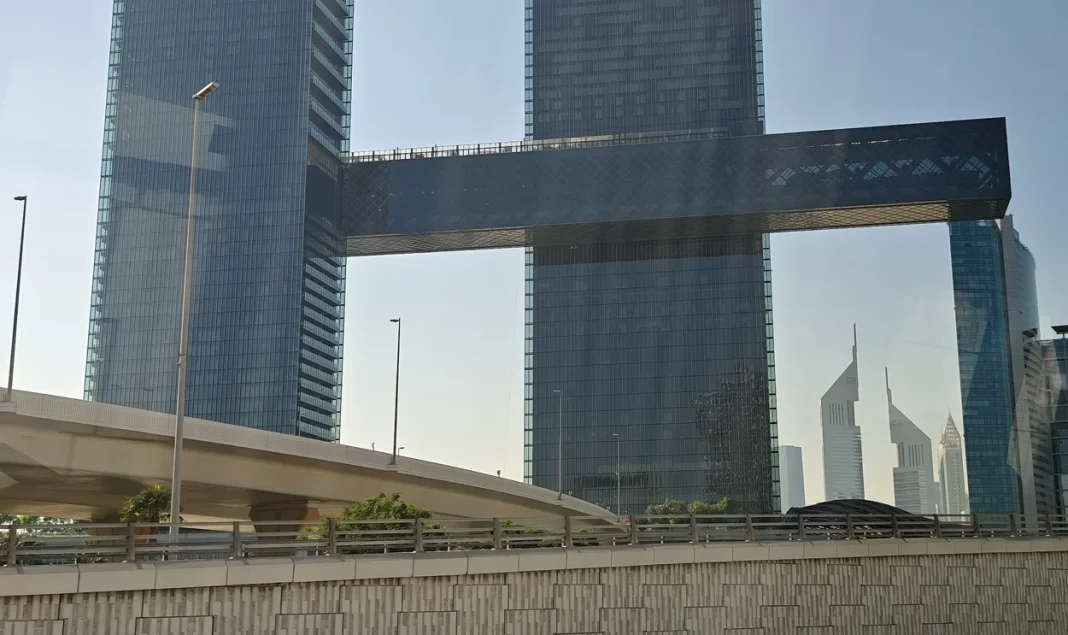
One Za’abeel emerges as the most ambitious architectural project in the Za’abeel district, where two towers standing 305 and 235 metres tall are joined by a horizontal structure that challenges traditional construction principles. Officially inaugurated in February 2024, the complex obtained the Guinness World Record for the longest cantilever building in the world thanks to The Link, an engineering piece that projects 67.5 metres into the void. This mixed-use development is not just an aesthetic achievement: it represents a new real estate typology where residential life, corporate spaces and luxury hospitality converge in an environment suspended above a six-lane highway. With a total area of 530,700 square metres, One Za’abeel redefines the concept of verticality by incorporating a horizontal axis as the functional core of the project.
Suspended engineering: how The Link defies gravity
The Link stretches over 230 metres in length and weighs approximately 9,580 tonnes, forming a three-storey structure located 100 metres above ground. Japanese firm Nikken Sekkei designed this skybridge to function as a counterweight system that reduces wind-induced sway in both towers, turning a structural challenge into an innovative technical solution.
The installation of the main cantilever required four days of continuous work to position a 900-tonne section that projects outward with no intermediate supports. This feat surpasses the 66.5 metres of the observation platform at Marina Bay Sands in Singapore, setting a new global benchmark. The design allows the towers to act as the pillars of a suspended bridge, distributing loads in a balanced way without compromising the stability of the whole.
Elevated experiences: residences, hotels and signature dining
The Link houses a gastronomic collection curated by Michelin-starred chefs, including La Dame de Pic by Anne-Sophie Pic, Qabu by Paco Morales and Sagetsu by Tetsuya Wakuda. The upper terrace features an adults-only infinity pool called Tapasake, recreating the atmosphere of a floating superyacht with 360-degree views of the Burj Khalifa.
The complex integrates a vertical resort operated by One&Only, the lifestyle hotel SIRO and 94 private residences that represent the most exclusive segment of the Emirati real estate market. These suspended residential units offer an unprecedented housing concept: living on a horizontal axis that connects two skyscrapers while enjoying five-star hotel services. ✓ Direct access to signature restaurants without leaving the building. ✓ Private infinity pool 100 metres above ground. ✓ Panoramic views towards the main architectural landmarks of Dubai.
Impact on the ultra-luxury corporate market
One Za’abeel is redefining corporate leasing in Dubai by offering office spaces integrated into an ecosystem of hospitality and entertainment. Multinational companies are seeking locations that combine architectural prestige with exclusive services, turning The Link into a strategic asset for corporations that prioritise employee experience. The Za’abeel district is positioning itself as a gateway to the city, benefiting from connectivity with Sheikh Zayed Road and the main metropolitan arteries. This central location allows corporate tenants to access consolidated financial areas quickly while enjoying a distinctive architectural environment that reinforces brand identity. Demand for premium space in iconic structures is driving rental rates above the market average, cementing One Za’abeel as a benchmark in the ultra-luxury real estate segment.
New urban paradigm: horizontal living in vertical cities
The concept of a suspended horizontal building introduces a break with the traditional skyscraper model, where verticality dictates spatial organisation. The Link operates as an elevated boulevard that replicates urban street dynamics at sky level, generating meeting and circulation spaces similar to a pedestrian square but 100 metres above ground.
This architectural typology responds to the saturation of Dubai’s vertical skyline, proposing developments that expand the built footprint along the horizontal axis without occupying additional land surface. One Za’abeel demonstrates that urban densification can occur in multiple directions, leveraging the airspace between existing towers to create new layers of activity. The project sets a precedent for future interventions seeking to maximise three-dimensional use of urban space in dense metropolises.