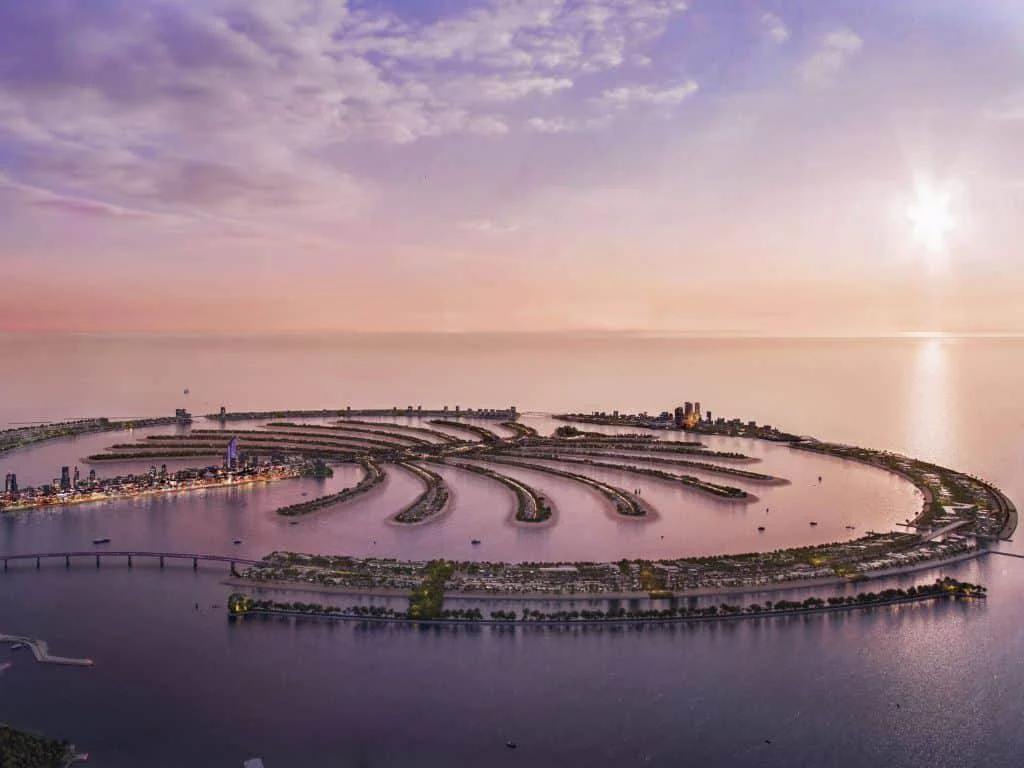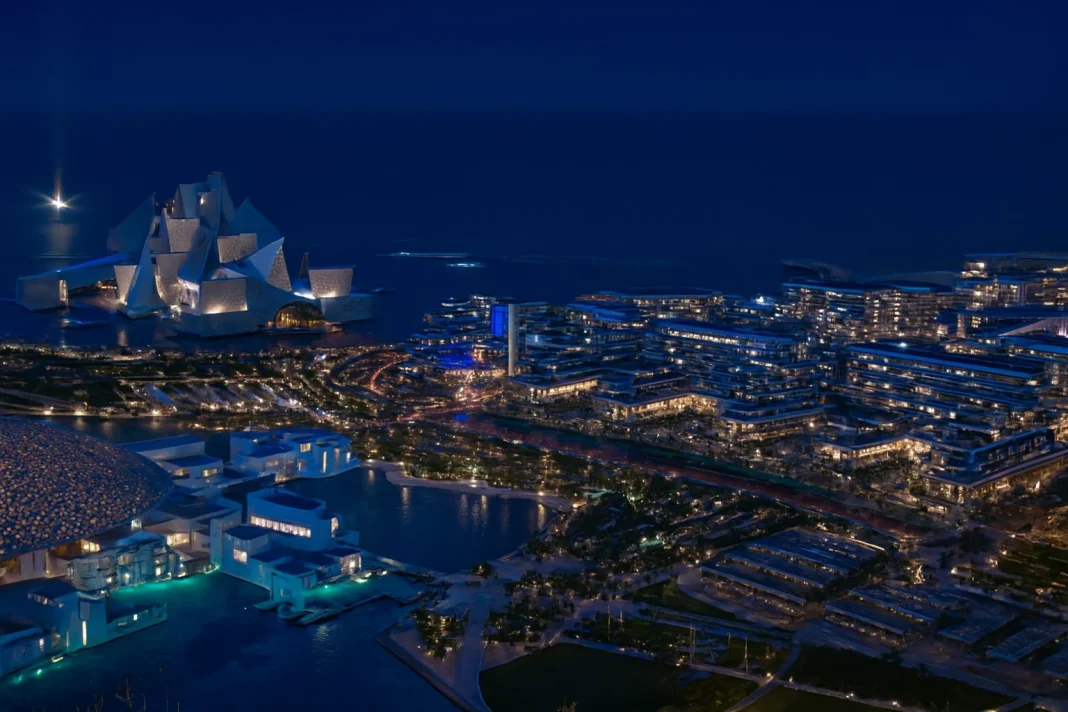


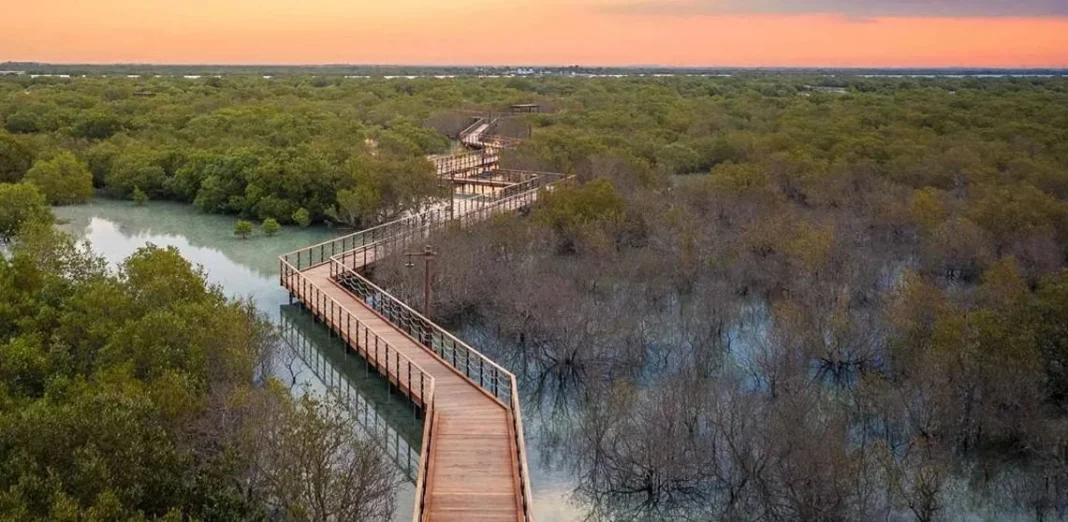
Jubail Island is not just another point on Abu Dhabi’s map, but a statement of intent that redefines the concept of habitability in the desert by integrating thousands of hectares of protected marine forests into its master plan. Crossing the bridges that connect to this enclave, the immediate sensation is leaving behind the frenetic urban pace to immerse yourself in a calm that only untouched nature can offer, even though you are just minutes from downtown. It is fascinating to see how the project has managed to ensure that architecture is subordinated to the existing landscape instead of imposing itself on it, creating visual corridors that allow residents to feel part of the surroundings.
The immensity of this development stands out for its unwavering commitment to environmental protection, hosting diverse wildlife that includes gazelles, sea turtles, and an impressive variety of migratory birds that find their temporary or permanent home here. Walking along its trails reveals that true luxury lies in disconnection and in the possibility of breathing air purified by millions of trees that act as the green lung of the capital. Jubail Island is thus positioned as a sanctuary where modern life does not compete with ecology but feeds on it to offer a superior quality of life. It is, without a doubt, a model that many will try to replicate in the future.
ARCHITECTURE THAT BREATHES AMONG MANGROVES
The first striking aspect when analyzing the plans of this development is its very low building density, a rarity in a market accustomed to exploiting every available square meter to erect crowded apartment towers. Here, the fundamental premise has been to let the land breathe, distributing homes with spatial generosity that guarantees the absolute privacy of each family and avoids any sense of overcrowding. It is evident that each villa has been strategically oriented to maximize views of the water or vegetation, eliminating visual barriers between the interior and exterior. This decision not only improves aesthetics but also naturally reduces ambient temperature.
The separation between the different communities has been achieved using the water channels themselves and the forest bands, creating organic boundaries that provide security without the need for aggressive concrete walls or endless fences. In this environment, residents can enjoy acoustic and visual privacy that is almost impossible to find in other premium areas of the city, where traffic noise is a constant. It is reassuring to know that silence becomes a tangible asset that enhances the value of each property, turning the simple act of being at home into a spiritual retreat experience. Urban planning here is, above all, an exercise in respect for personal space.
SIX VILLAGES WITH THEIR OWN IDENTITY
The master plan is structured around six distinct villages or districts, each with a unique personality that allows buyers to choose the environment that best suits their life stage or aesthetic preferences. From the exclusive Bada Al Jubail, which hosts ultra-luxury mansions facing private beaches, to more dynamic and connected areas, diversity is the key to creating a rich and varied social fabric. It is a wise decision that each district maintains its own architectural essence while sharing the common DNA of sustainability and discreet elegance that characterizes the entire archipelago. This is not a monotonous development, but a collection of micro-destinations.
Strolling virtually through Nad Al Dhabi or stopping to admire the details of Ain Al Maha reveals the obsessive care that has been put into the user experience, from the width of the sidewalks to the low-impact night lighting. It is impressive to see how these communities, although independent, are interconnected by a network of paths and waterways that encourage sustainable mobility and neighborhood interaction. The reality is that living here fosters a sense of belonging that is difficult to replicate in impersonal skyscrapers, bringing back neighborhood life in its most sophisticated version. Jubail Island thus manages to humanize the scale of luxury real estate.
AN INVESTMENT SHIELDED BY SCARCITY
From a purely financial perspective, betting on this project is a masterstroke due to the limited supply of land available in such privileged and environmentally sensitive locations in Abu Dhabi. The law of supply and demand plays in favor of the owner here, since the physical and legal impossibility of expanding construction in protected areas guarantees that the asset will maintain its exclusivity in the long term. Analysts agree that the restriction on new permits in similar areas turns these properties into scarce assets, protecting their value from fluctuations in the mass market. This is not about speculation, but intrinsic value.
The price history in the area shows a constant upward trend, driven not only by local investors seeking to upgrade their primary residence, but also by a growing flow of foreign capital that sees the Emirates as a safe haven. Acquiring a property on Jubail Island today means anticipating an almost certain appreciation once the project is fully consolidated and the vegetation has further matured. It is essential to understand that smart capital seeks irreproducible assets and there is nothing harder to replicate than a millennial natural ecosystem integrated into your garden. Capital gains here are not a promise, but a logical consequence.
AMENITIES THAT RIVAL RESORTS
Life on this archipelago goes far beyond the four walls of a house, offering a range of services that would outshine many five-star hotels in the region. Imagine having access to a private beach club, marinas for your yacht, and cutting-edge wellness centers without leaving the secure perimeter of your community. What stands out is that these facilities have been designed for socializing and community building, breaking with the isolation that sometimes characterizes great fortunes. It is the perfect balance between private life and select social activity.
For families, the inclusion of top-tier schools and community centers on the island eliminates the need for long commutes, giving parents back the most valuable resource of all: time. In addition, the famous Jubail Mangrove Park, with its educational walkways and kayaking activities, becomes the ultimate playground for children and adults alike. The fact that leisure is centered on nature and outdoor sports encourages a healthy lifestyle that contrasts with urban sedentarism. Jubail Island thus redefines the concept of amenities, shifting it from consumption to experience.
A GREEN AND SUSTAINABLE FUTURE
Looking to the future, this development is not static, but has ambitious plans to further enrich its biodiversity by planting one million new mangroves in the coming years. This initiative is not just “greenwashing”, but a comprehensive strategy to combat climate change by capturing carbon and protecting the coastline from natural erosion. It is inspiring to think that your investment directly contributes to environmental regeneration, making you an active participant in the conservation of the planet while you enjoy your home. Here, sustainability is the foundation, not the finishing touch.
The delivery of the first phases and the continuous evolution of infrastructure promise to consolidate this destination as the most prestigious postcode in the capital in a very short time. As the world increasingly values health and space, places like this stand out from traditional competition by offering something that money can hardly buy elsewhere: peace of mind. Everything indicates that Jubail Island will set the standard for future urban planning, where success is not measured in height, but in the quality of the air you breathe every morning. It is, quite simply, the place where everyone will want to be.